
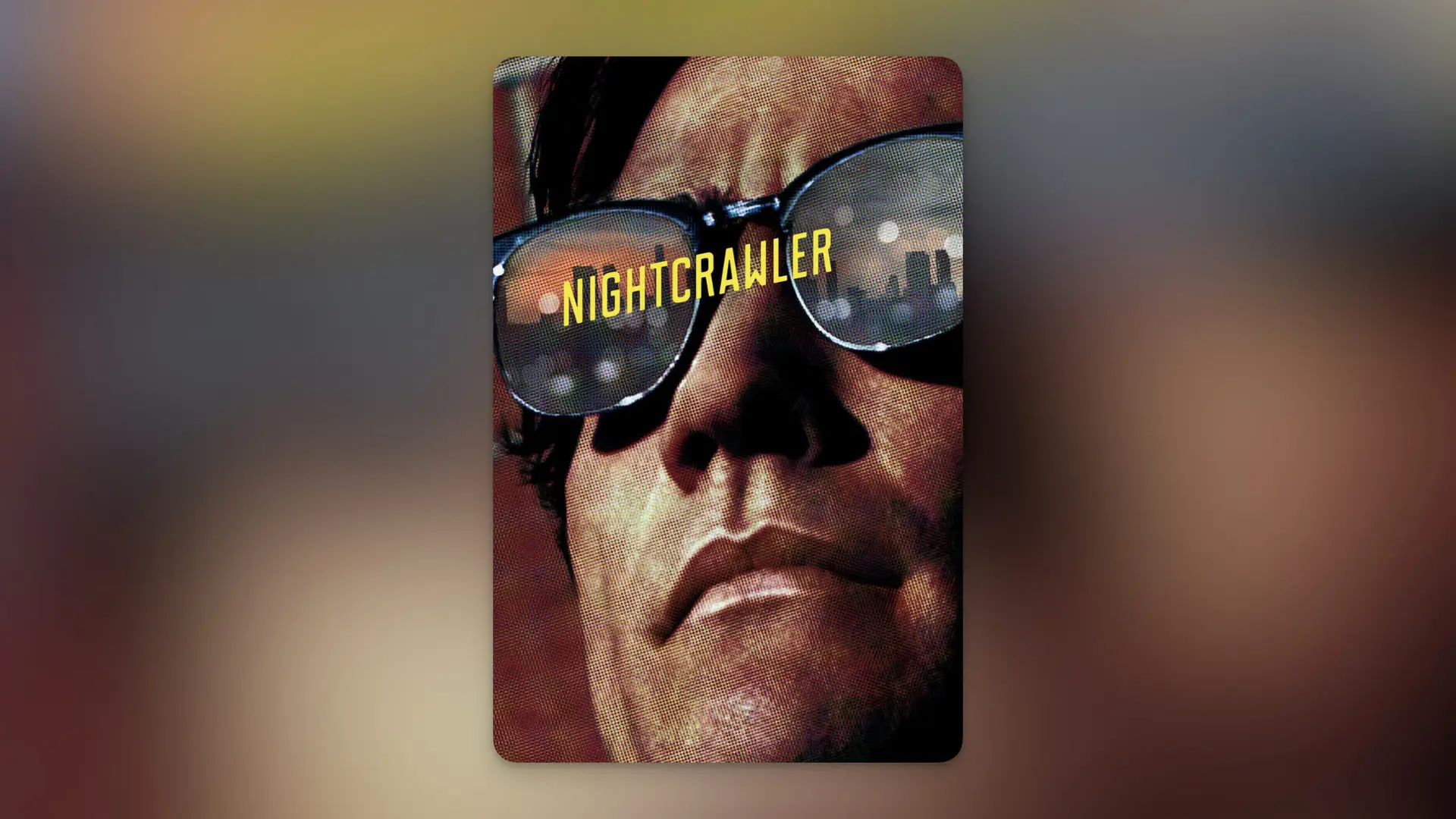
I asked my kid, who is an EMT and who actually goes to these scenes, whether stringers really show up at accidents the way Lou Bloom does, before the bodies are covered. Absolutely, was the answer. Almost every time.
Well, crap.
I had seen Nightcrawler three or four times before I asked. I thought Dan Gilroy had pushed the world maybe fifteen percent past plausible so we could recognize the satire and enjoy it from a safe distance. Los Angeles glows. Lou drives that red Challenger like a demon. He drags bodies around for better framing and speaks fluent online business seminar while doing it. Surely some of this had been turned up for the movie. After all, the last time I was in local news was 30 years ago in a Colorado town much smaller than LA. Not really a stringer town back then.
Apparently I invented the safe distance.
Gilroy refuses the corruption story altogether. Lou arrives fully formed. Stringing gives him customers.
His management speech at the end is repulsive because it is a victory speech. Nobody corrected him, and every institution he touched got what it asked for. Handcuffs would make this movie much easier to live with, and ending Gilroy apparently has no interest in offering us.
Gyllenhaal is doing the best work of his career here and I don’t think it’s close. Yes, he lost thirty pounds and turned his eyes into half the available real estate on his face. Everybody talks about the coyote look. It’s right there. I can’t stop watching how calm he is. Lou rarely raises his voice. He does not seem to experience the strain of pretending to be normal because he believes he is doing an excellent job at being a person.
He moves a corpse across the asphalt with the same concentration he brings to a negotiation with a news director. He talks about goals, leverage, reliability, personal growth. He is every lousy LinkedIn post standing upright in a cheap suit. A twitchy, openly vicious Lou would be a relief. This guy sounds employable.
The Academy left Gyllenhaal off the ballot, a decision that gets funnier and stupider every year.
The restaurant scene. Lou turns coercion into his vendor negotiation. His reasonable, well-modulated voice is unbearable because Nina understands every term and has no affordable way to refuse.
Rene Russo barely moves. You can watch Nina doing the algebra. She helped build this market and eagerly bought what Lou sells. Russo lets Nina own every ugly choice that got her here while Lou extorts her anyway. I hate the scene. It may be the best scene in the movie.
This is where Nightcrawler fits into our run of films about consent and platformed lives. Truman never got asked. The dead and bleeding people in Lou’s footage cannot answer. Nina answers because Lou has made no unacceptable. There is the season, apparently.
Robert Elswit makes Los Angeles almost indecently beautiful at night. The streets stretch forever. Sodium lights smear across the windshield. Lou looks terrific hunting through them. Then his video lands on the newsroom monitors and looks like shit: harsh light, blown color, blood, somebody’s kitchen. Nina leans closer.
James Newton Howard gives Lou hero music. When Lou drags a body into the frame, the score believes he is leveling up. It gets the blood moving even when I know exactly what Howard is doing. It works on me every time.
I understand the argument that Lou is too singular to indict the system around him. Maybe this is just a character study about one entitled sociopath. I don’t buy it. Joe Loder, Nina, and KWLA are already in place. The job and the audience exist before Lou. He takes over because he is willing to go farther. To paraphrase a movie about a great president: the people will listen to whoever steps up to the mic.
Gilroy made this in twenty-seven days, across eighty locations, for $8.5 million, as his first feature.
I wish more of the movie were bullshit.