
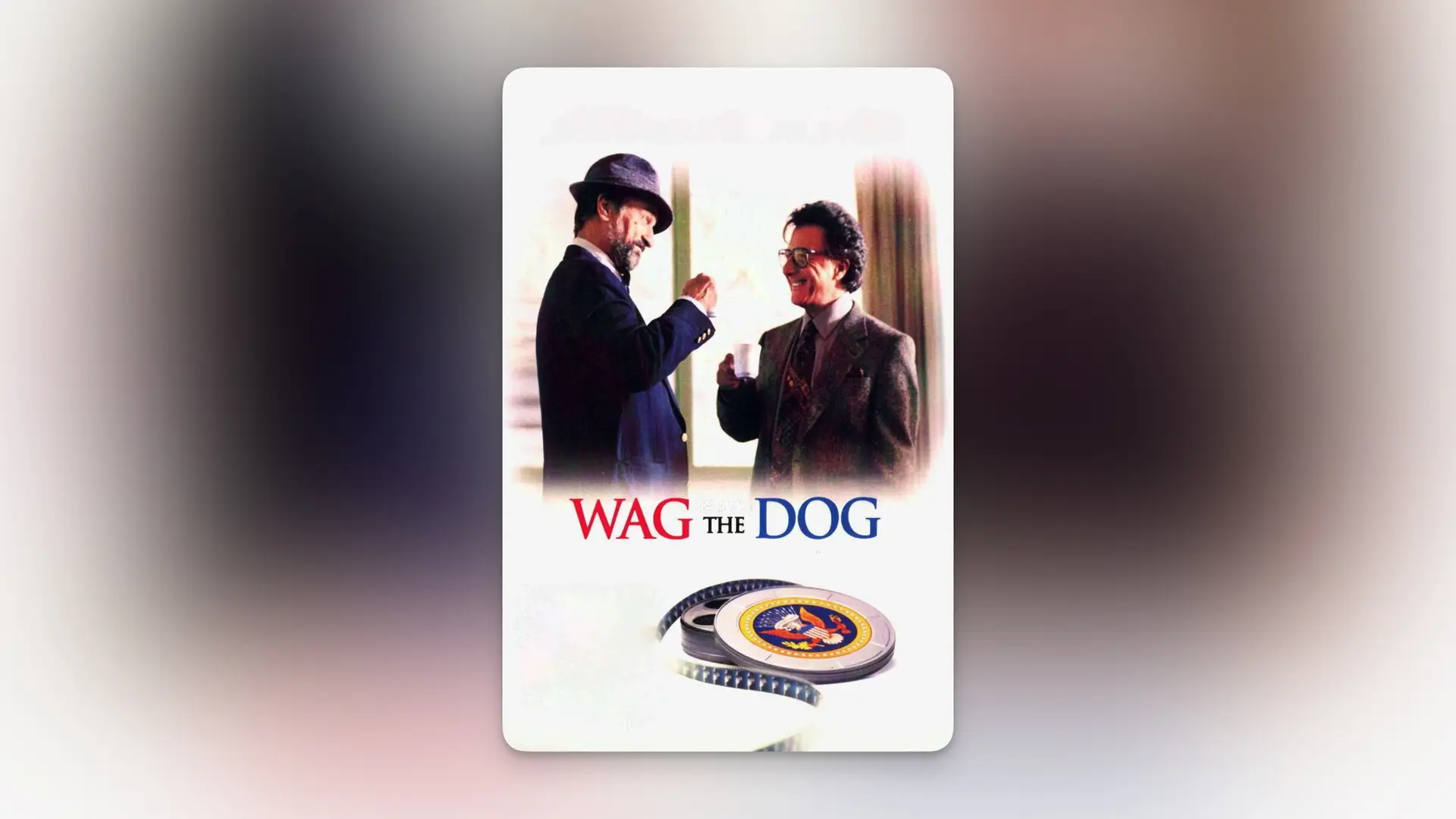
I think Stanley Motss would have kept his mouth shut.
I left Wag the Dog arguing with the ending. The man gets to produce a war. He makes Albania scary, turns a bag of chips into a kitten, plants an old song in the Library of Congress, and lands the whole business in eleven days. The CIA cancels his war and he comes back with a second act. A plane falls out of the sky and he gets a funeral. By election night Stanley has made the greatest thing of his career, and almost nobody knows he was in the room.
Then he demands credit and Conrad Brean has him killed.
Come on.
I understand the vanity joke. Stanley has enough hair, silk, and grievance for three producers. I also think he knows more about credit than anybody in the movie. He has spent a career watching stars take bows for films saved by people whose names roll while the audience is looking for the parking tickets. He knows the difference between applause and getting the movie made. I cannot believe he would trade the private pleasure of this particular secret for a press conference and a shallow grave.
Barry Levinson made the movie during a pause in Sphere. Warner Bros. thought he was bluffing when he said he would use the opening to make something else, so he assembled De Niro, Hoffman, and Heche and shot this in twenty-eight or twenty-nine days. The schedule suits it. Hoffman pushed for overlapping dialogue. Levinson kept two cameras moving, sometimes three, and made the actors play whole scenes because they did not know when one of those cameras might find them. Everybody talks like they are really trying to get a war out by Friday.
Hoffman had initially passed because Stanley looked like another fat, cigar-smoking producer stewing in a Beverly Hills pool. He came back anyway and tried accents and rhythms in rehearsal until something stuck. The huge glasses and silk robe helped. So did the pleasure on his face every time the plan broke. Bad news makes Stanley happy. He gets to fix it.
De Niro on the other hand looks as if he is waiting for somebody to bring his coat. Conrad speaks quietly and rearranges the federal government with a cocktail. Put him in a room with Hoffman and I’mm done. I’ll go ahead and watch until one of them leaves.
Anne Heche was twenty-seven and Winifred Ames had been written as a man. Levinson changed almost nothing after her table read. That may be why the movie never makes her carry some extra load of feminine conscience between the two men. Winifred keeps being horrified and goes right on making the next call. Heche has to catch whatever Hoffman and De Niro throw across the room, often while they are both still talking, and she never looks like the junior member of the trio.
Mostly I want to watch these three work.
My favorite scene is Stanley asking Conrad how close he really is to the people running the country. Conrad makes a call. A minute later, the language he just used comes back through the television. Stanley gets his answer. The whole conspiracy is sitting in a house near a phone. I find that much worse than blinking maps.
That scene is also why I resist calling the movie prophetic. Wag the Dog opened on Christmas Day in 1997 and the Lewinsky story broke less than a month later, which is absurd timing. But Watergate was already old enough to have a second or third marriage. Larry Beinhart wrote the source novel after watching the first Gulf War get packaged for television. Nobody needed second sight. They needed cable.
I like that we never see the president. He exists as a photograph and an emergency other people are enjoying themselves fixing. The Firefly Girl disappears almost as quickly, which bothers me more. Nobody wants an answer from either of them. An answer would only slow down the people who have already decided there will be no consequences.
I lose the movie when Woody Harrelson gets on the plane.
Old Shoe is better before we meet him. He is a code name, a fake folk song, and a pair of sneakers hanging in a tree. Keeping him offscreen would have put him in the same strange space as the president. The people making the story can do whatever they want with a man who is not in the room.
Then Shoe arrives as a military prisoner who raped a nun, is off his medication, and exists to make the next twenty minutes harder. Harrelson plays the role he was given just fine. The role stinks. The comedy had been aimed at powerful people who could turn a scandal into a pleasant workday. Now it has a damaged man with no idea why he is there, and the movie makes him the loudest joke in the room. Then the plane goes down. Then a farmer comes out with a gun. I can feel the screenplay pulling levers of panic.
The real movie had its own fight about credit. Hilary Henkin wrote the first adaptation. David Mamet rewrote it. The Writers Guild gave them shared credit, Mamet wanted sole credit, and Levinson threatened to resign over the decision. Beinhart later joked that the finished movie was exactly like his book except for the characters and the plot. Apparently Stanley was not the only producer in the building with a credit problem. Funny. I still do not believe him.
My ending is barely an ending. Stanley watches the election coverage and sees somebody else take credit. Conrad waits for the explosion. Stanley smiles and goes home. He spends the rest of his life knowing exactly what he made and knowing he can never tell anyone. This should eat him alive. I think he would sleep beautifully.
I would hate him for it, which seems much better than watching the movie punish him for forgetting how producers work.
De Niro, Hoffman, and Heche are too good together for the last act to wreck the rest of the film. I had a wonderful time. I still think Stanley would have kept his mouth shut.