
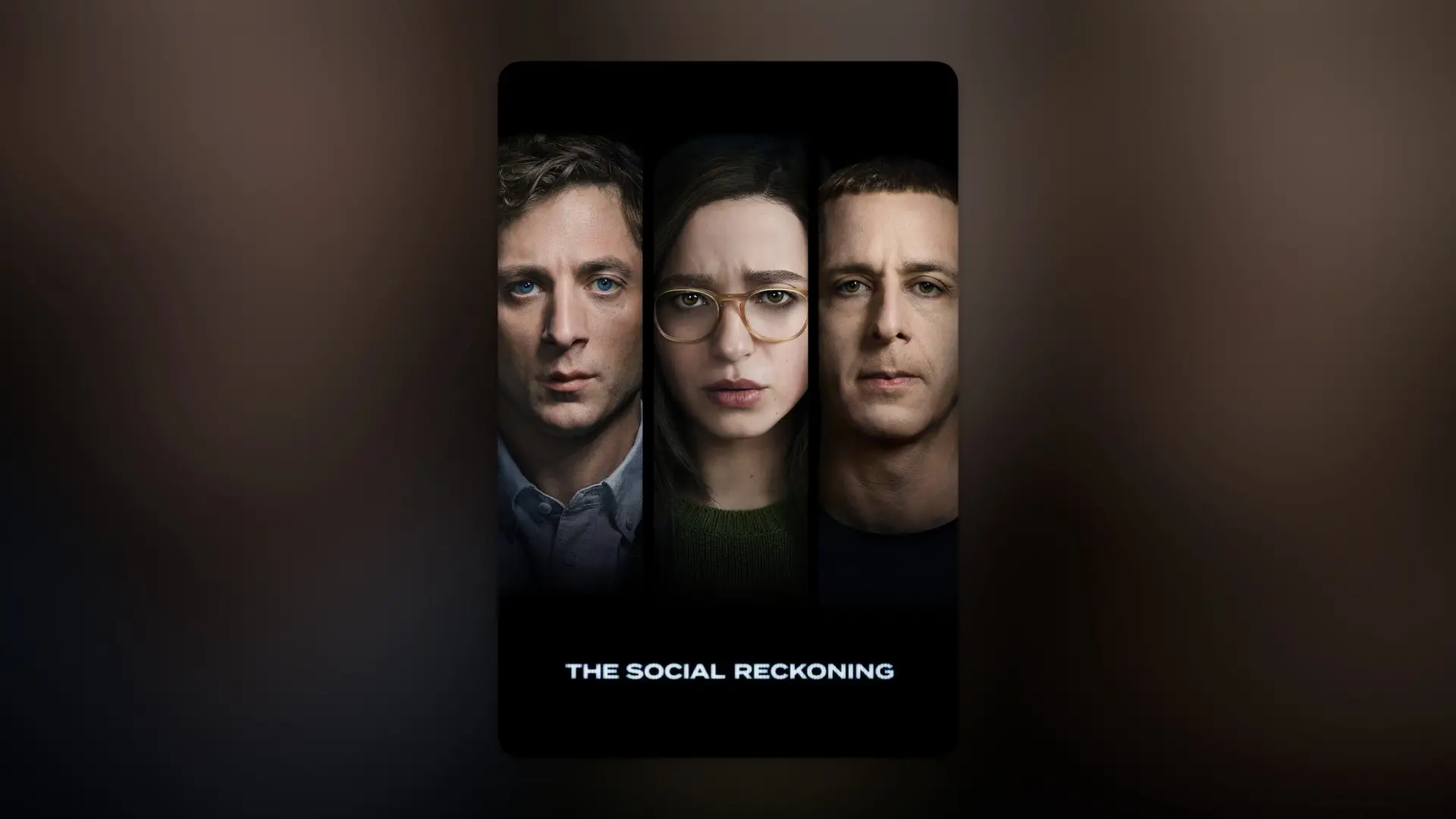
I went in hoping for a Sorkin movie and I got a Sorkin movie. What am I supposed to say? I’m in the bag. Every time I like one of these I end up apologizing my way out of the Sorkin-shaped wet paper bag by pointing at The West Wing, and look, here I am doing it again.
They are photographing computer screens with a dumb phone, people. It’s not Dragon Tattoo sexy (nothing is), but I didn’t hate watching research happen, and there are plenty of movies where I do. I love the way the dates slide around on screen as Sorkin moves between years. More movies should help me keep track like that. I can follow the investigation and start to see the pattern in what they’re finding: a reshare of a reshare landing in a feed because the algorithm keeps giving it another audience. Now I have a better question to ask about a post than who shared it. How much help did it get before it reached me?
That’s enough to keep the conversations interesting without making Mikey Madison’s Frances Haugen tell Jeff Horwitz he’s stupid quite so often. For someone who wants people to connect, she spends a lot of time explaining why she’d rather not talk to this one. I like Madison in the role, but I’ve heard Sorkin establish who’s smartest in the room before. Jeremy Allen White helps by declining most of the opportunities to be offended. He’s getting this story, and her opinion of him can wait. It lets me enjoy exchanges I’m already wishing Sorkin would stop writing.
Sorkin looks happiest directing inside four walls. I could stay in those hotel rooms and conference rooms with these actors for a long time. Then we go to Puerto Rico and everybody’s smiling at the sun like they forgot what it’s like to be alive. I start noticing how hard the movie is working to make the place look inhabited.
The last six minutes give me more trouble. The prologue shows one person getting radicalized; the ending finds her among the crowd at the Capitol. The connection makes sense. I’m less sure the film can bring in everything January 6 means and still hold on to its argument about the smaller ways social media damages a culture. That day involves so much more than the decisions at Facebook, however clearly the film has explained them.
Jeremy Strong. I like the stillness he gives this version of Zuckerberg, the man in the suit preparing for congressional testimony. I don’t need him to recreate Jesse Eisenberg. In the war room, when everyone needs a decision, that stillness becomes an inability to function. It reminded me of Pattinson’s Chris Hansen on the kitchen floor in Primetime. Strong makes me believe this man has practiced being in charge without learning how to lead. I’m not sure a less loaded ending would have given him the same opportunity.
I have fewer objections to Sorkin’s rearranging history here than I did with Steve Jobs or The Social Network. My bigger reservation is that this feels about three years late. We’ve had time to learn the story and get heartsick about it, and I wanted the movie to take me further than it does. I’ll still recommend it, including to people who spend a lot of time on Facebook. It makes the choices behind the feed comprehensible, which is worth more to me than another warning that social media is bad for us.
I saw the fist pump coming the way you see the anesthesia coming. Ten, nine, you’re not getting me, I’m staying awake. Then it’s Judd Nelson on the football field and I’m out cold. Love-hated it. Hate-loved it. It’s dumb. It got me.