
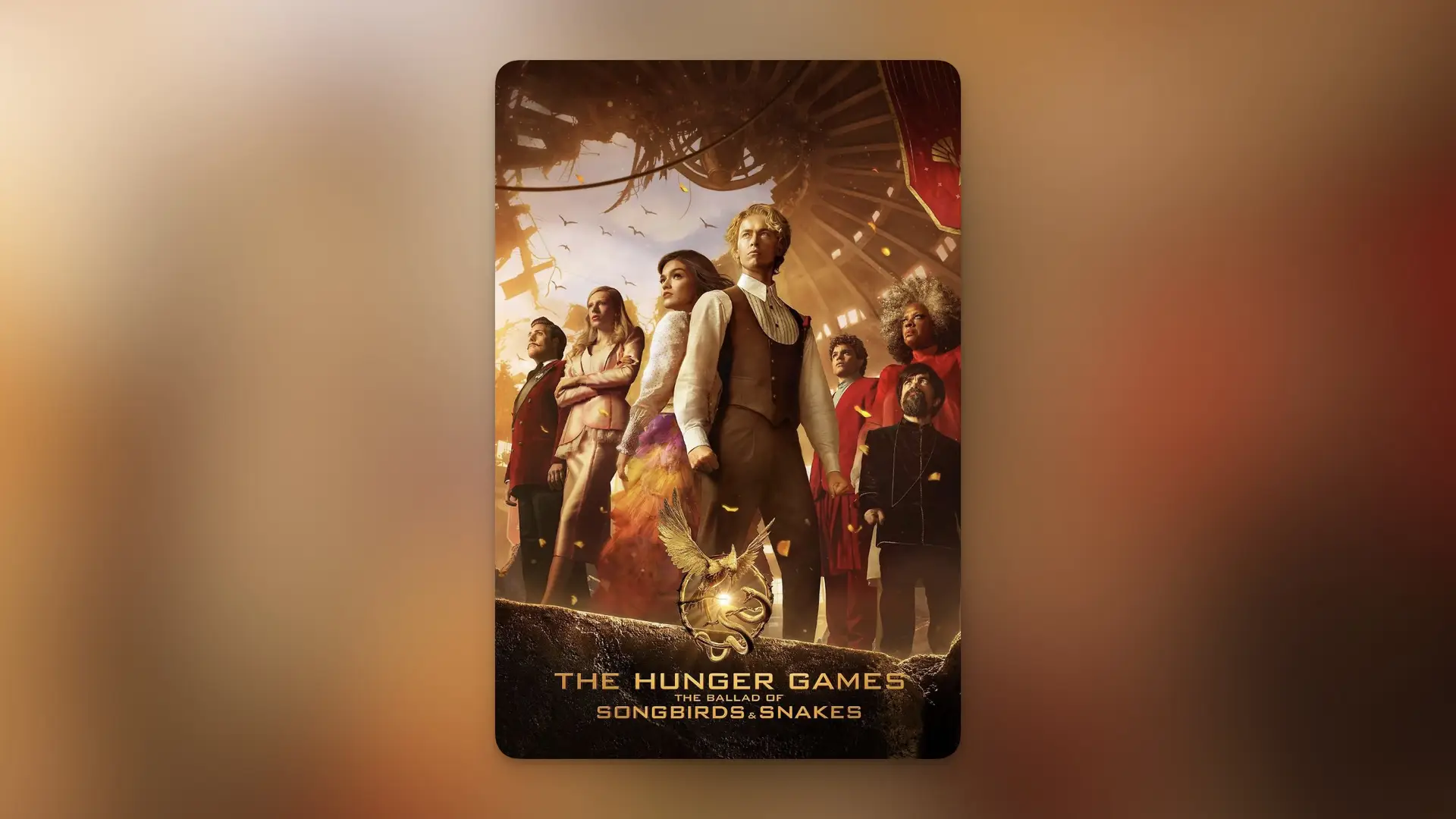
The first time I watched The Ballad of Songbirds & Snakes, it took me weeks. I’d pause it to go to the bathroom and never come back. On a second viewing, with my kid, I stayed for the whole thing and didn’t find it much easier. I like this world. I wanted to see how Snow became the man we know. I spent most of the film waiting for it to trust me with anything I might have to work out.
Grandma’am announces that everyone outside the Capitol is a savage. Highbottom’s drug is called morphling, lest the audience need a moment to identify the problem. The costumes are terrific, particularly Viola Davis’s, but the writing seems equally determined to make every prejudice visible from across the room.
I don’t object to the broadness on principle. Jason Schwartzman’s Lucky Flickerman is an amateur magician broadcasting children killing each other, and he’s my favorite thing in the movie. He wonders whether a descending tank of snakes might contain candy. He’s funny because he has a broadcast to fill and absolutely no judgment about how to fill it. I don’t need the film to explain him afterward.
Tom Blyth may have bamboozled me. He’s so charismatic as Snow that I kept reading kindness into behavior I was supposed to be reconsidering.
I can see the accumulating excuses. Snow cheats to keep his tribute alive, and when he kills someone in the arena, he’s there to rescue a friend. He has reasons. His friendship with Sejanus also gives me evidence of how far he’s willing to go, and I don’t want to discount that. Josh Andrés Rivera plays someone whose belief in other people’s goodness makes him vulnerable to a friend who doesn’t share it. Snow’s betrayal hurts, particularly when Sejanus calls for him at the hangin’ tree and he won’t look. Their disagreement about human nature has consequences for someone I care about. I wanted that relationship to do more of the work of persuading me about Snow. I could believe him learning to rationalize his way into running this place. Too much of the film’s explanation depends on what happens with his girlfriend.
I never connected with Rachel Zegler’s Lucy Gray. The accent distracted me every time she spoke. She sings beautifully, but even the music feels arranged to showcase her rather than give me a place she belongs to. Let somebody sing to her. I’d happily trade some of this film’s 157 minutes for another performer holding our attention while she listens. I want to believe in this musical community. With so little opportunity to hear anyone else, the songs keep feeling like interruptions from another movie.
In the cabin, Francis Lawrence gets the camera down low, looking up at their faces as Snow discovers the guns and realizes what they could mean for his future. Lucy Gray’s expression makes me wonder what she knows and whether she’s been manipulating him. I like being unsure of her here. Then he takes an age to explain who the third person he killed was, and the answer is the old version of himself. We laughed. Good grief. The film had barely given me room to interpret a look before somebody had to explain his transformation right out loud.
Blyth’s panic in the woods afterward is my favorite stretch of his performance. I wish I believed the film that got him there. There are decades left before he becomes Donald Sutherland’s Snow, and I can allow for that. This movie still has to persuade me about the part of his life it chose to tell.