
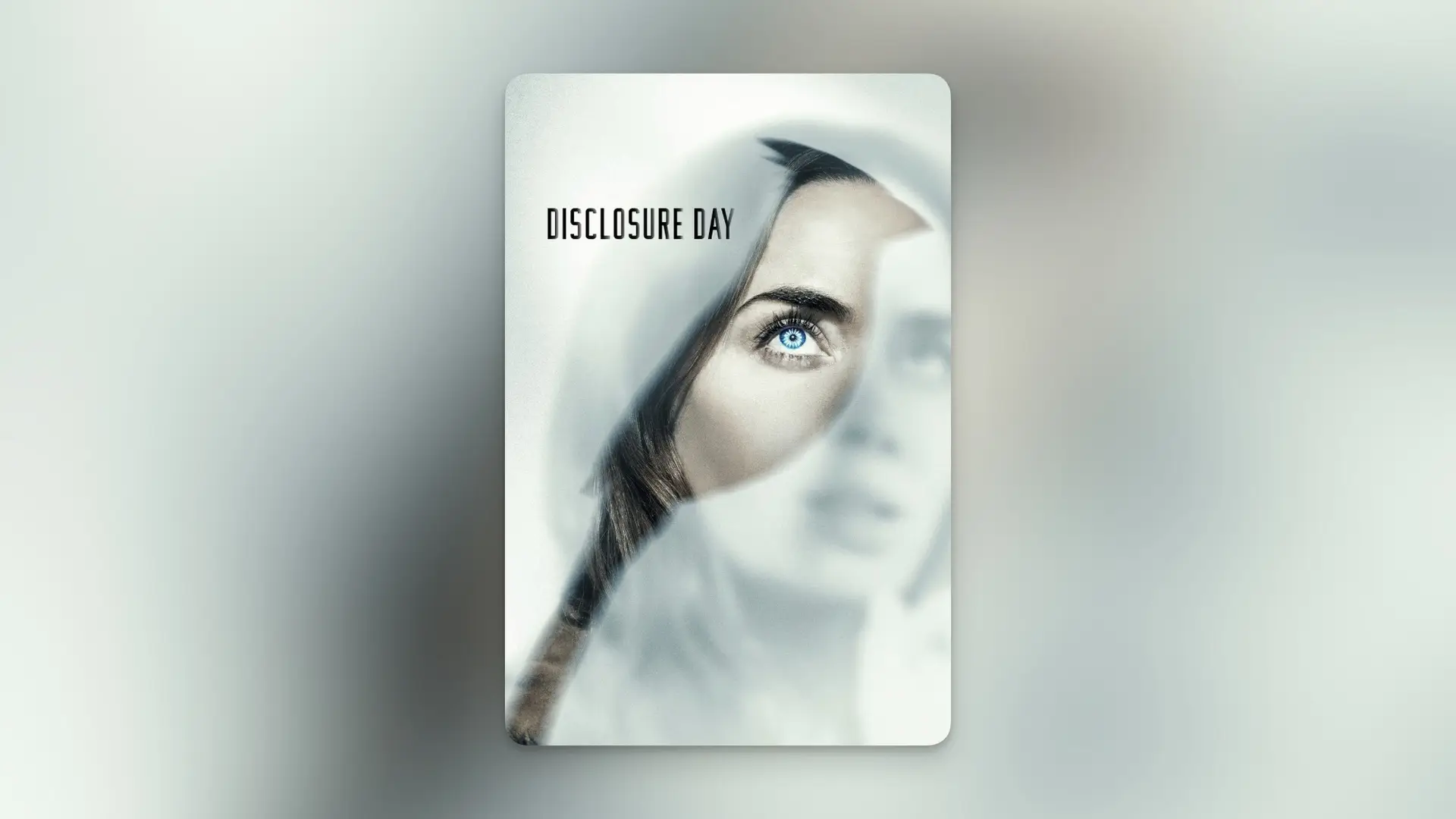
I went into Disclosure Day not wanting to like it. I’ll admit that up front. I don’t care about UFOs or aliens. Statistically I believe there’s life out there somewhere and I find it irrelevant to the price of gas. That was my prior going in. Spielberg has been saying for years that he wanted to make a film about aliens being real and the cover-up being real and the disclosure being real, and I was prepared to spend two hours in a comfortable seat being a dick about it.
Then Spielberg did the Spielberg thing.
He plays the hits. The big old tears fall down your face whether you want them to or not. He’s seventy-nine years old, he’s been making movies my entire life, and the films he made are the films that made me want to like movies. I sat down expecting to roll my eyes through two hours of Disclosure Day. Instead I cried at Emily Blunt having a panic attack on a train.
The setup is Spielberg’s third visit to the alien-contact well. Close Encounters of the Third Kind was private awe and E.T. was intimate childhood friendship. Disclosure Day is the public, global, news-cycle version. Government is still a villain but the bigger villain is big tech and the architecture of information control. Coleman Domingo plays the empath who lets people be seen. Josh O’Connor plays the translator who can speak the language. Emily Blunt plays the chosen one who can hear what the aliens are saying because they came to her bedroom when she was a girl in the warm snow. Colin Firth is the technocrat trying to keep the genie inside the bottle for the most rational and conservative reasons. The film’s final line is one word.
Daniel and Margaret end up in her childhood bedroom. They sit on the bed together. They hold onto the bar, the alien device that does whatever the scene requires. They see what she saw when she was a kid. The bedroom becomes a stage. Little-girl Margaret walks out into the warm snow. I wasn’t ready for it and it took me down.
The bar is Wonkaville. Spielberg refuses to define what it can do and the movie keeps using it for whatever. It makes you invisible, lets you dive into other people’s heads, and gives Colin Firth a way to possess foreign operatives across the world from a kitchen in Kansas. The characters in the movie also don’t know what it does. That was the trick that sold it for me. Nobody onscreen knows the rules of the bar. The scientists are guessing and the targets are guessing. Spielberg is telling us not to ask.
The cosmic FaceTime scene, where Colin Firth breaks out in a cold sweat in the farmhouse kitchen because his consciousness is also at the table, is ambitious. I expected this scene to be a mess. The cutting saves it. Firth sweating in two physical locations at once is clutch.
The car chase through the farmhouse living room is the dumbest thing I love in this movie. Josh O’Connor comes over the hill, sees the farmhouse has been overrun by black SUVs, and instead of running away decides to steal a black SUV out of the front line and crash through the building. The whole sequence is so stupid and I had so much fun watching it that I have to acknowledge it on the record.
Courtney Grace as the news anchor at the end might be the best performance in the movie. Here’s a person whose entire job is professional cool in front of a camera and then we get to watch her to lose it on air. Grace finds the exact register. She’s still anchoring and still putting together sentences right up until she can’t.
My one real axe to grind: Eve Hewson and Wyatt Russell have a lot to do for the middle of this movie and then they’re out getting lattes for the rest of the cast. Russell gets abandoned at a gas station and appears once more in the closing montage just to have his mouth open at the camera. That’s a weird call about economy of character. I think the movie owed Russell more than a gas-station goodbye and a mouth-open cutaway. The film loved Eve Hewson enough to give her real material in act two and then forgot it had her. Also, I think I’m the last to know she’s Bono’s daughter. She doesn’t give Bono royalty on Bad Sisters.
Where this sits in the alien Spielberg trilogy. Close Encounters is the spine and E.T. is the heart. Disclosure Day is the public reckoning, the recap, and the closing argument for why we need to be able to talk to each other. The fact that he’s making this argument in 2026, with David Koepp at the script and the regular Spielberg band reassembled at the cameras and keyboards and orchestra, is part of what makes the movie hit. This is the guy at seventy-nine making a film about whether we can still hear each other. The answer the movie offers is yes, we can.
Spielberg gets to stop now if he wants to. Disclosure Day is a movie that would be okay to end on. He plays the hits, he plays them well, and he made me cry while I was trying not to. Classic Spielberg.