
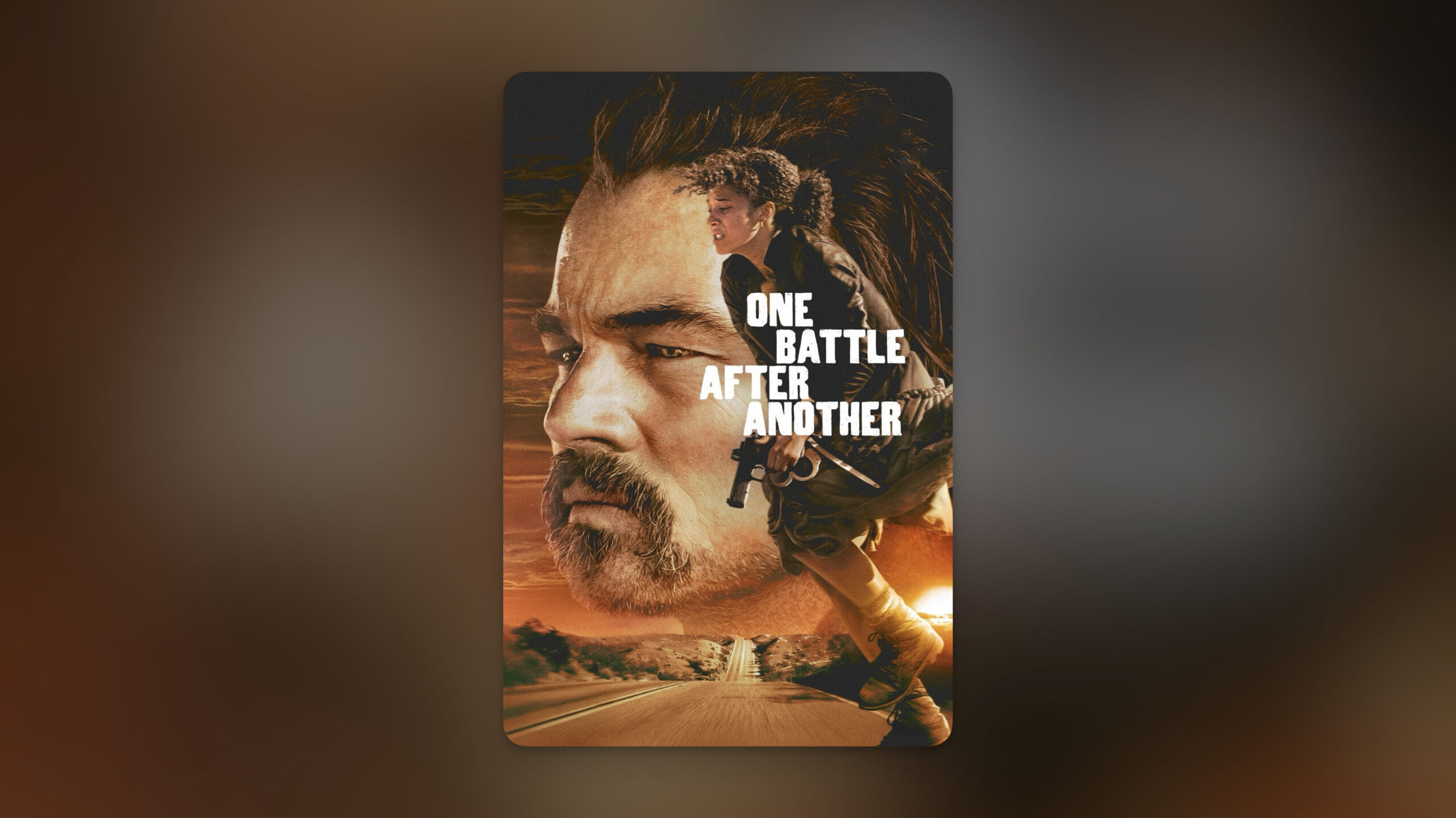
Paul Thomas Anderson spent twenty years hiding from the present in period pieces. Smart move, honestly. Why wrestle with contemporary politics when you can make beautiful films about oil barons and fashion designers and call history a day?
Maybe it was watching detention centers spring up like Starbucks. Maybe it was realizing his kids would inherit whatever mess we’re building. Whatever the reason, Anderson decided to make a movie about right now, and the result is his most human film in decades.
One Battle After Another follows Bob Ferguson, played by DiCaprio like he’s channeling The Dude but with actual consequences. Bob used to be a revolutionary. Now he’s a stoner dad whose biggest act of resistance is refusing to let his daughter have a cell phone. Might actually be more radical than bombing government buildings.
When his daughter gets kidnapped by his old nemesis (Sean Penn as a military sociopath with the ridiculous name Col. Lockjaw), Bob discovers that sixteen years of prioritizing bedtime stories over bomb-making has left him hilariously unprepared for revolution. For example, Bob tries to contact his old revolutionary organization and discovers they’ve become a call center. Complete with hold music. The revolution got bureaucratized while he was getting high.
Lockjaw could have been a cartoon villain. Instead Penn creates something terrifying: a recognizable human being whose personal failures scale into institutional violence. The character wears lifts in his shoes, desperately needs approval from his Christmas-themed secret society bosses, and can’t separate his sexual obsessions from his professional duties. This is how individual pathology becomes everyone else’s problem.
The Christmas Adventurers Club (because of course the shadow government has a holiday theme) shows you how power actually looks: rich men playing fraternity games in underground tunnels, making hand gestures around Christmas trees like the world’s most expensive nativity play. This is an America just a fraction past our current reality with detention centers, surveillance states, white supremacist cabals. This is happening now.
What stops it from becoming a lecture is that it never stops being about people. Bob’s not fighting fascism in the abstract. He’s trying to get his kid back. The politics emerge from character choices, not the other way around.
The climactic chase through desert hills generates enormous tension through depth of field compression and just… driving… toward a danger we can’t control. The ending wrecked me. Willa drives three hours to join a protest. Not to plant bombs or start fires. To show up. The next generation taking different tools to the same fight.