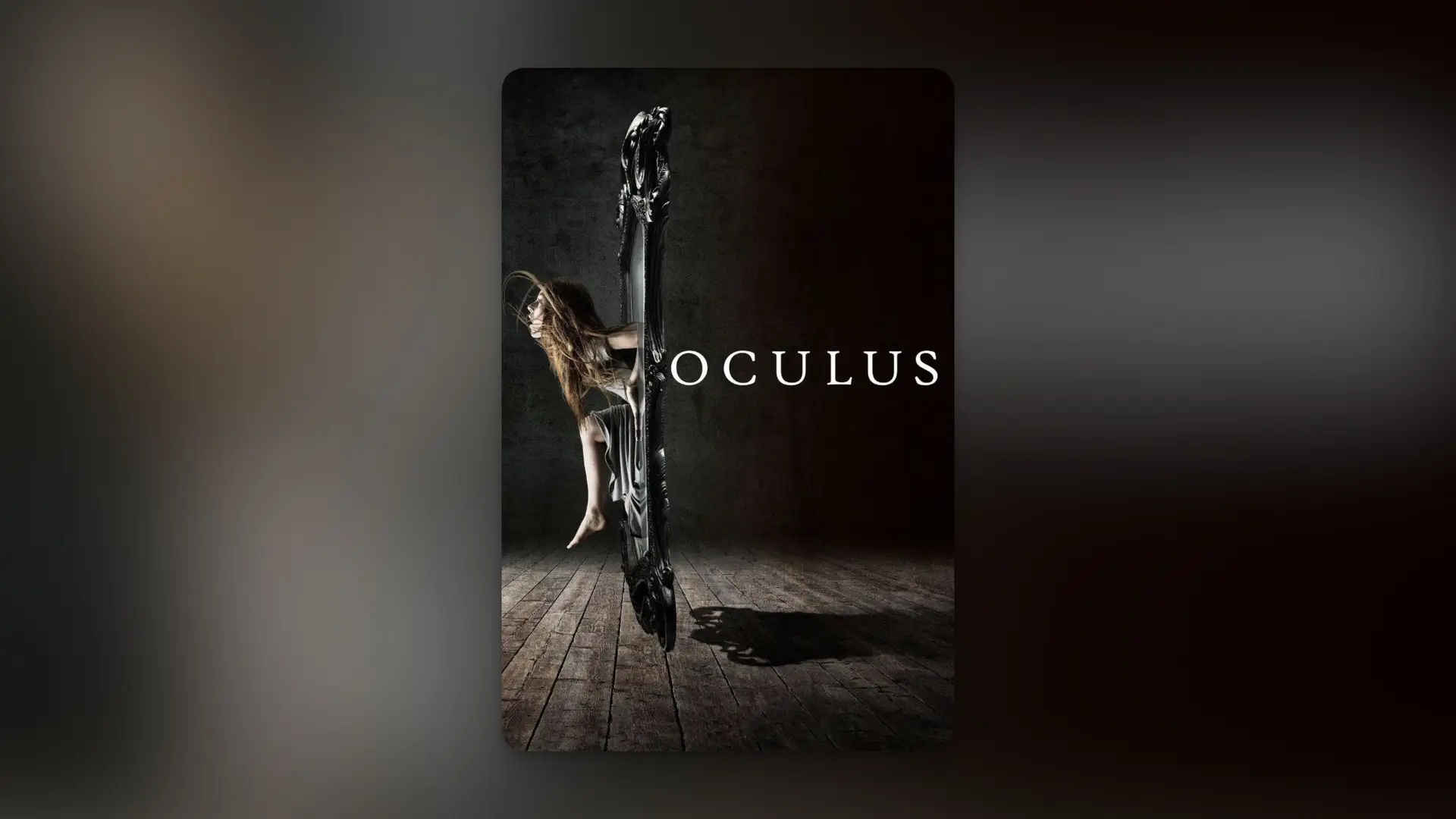
The Lasser Glass can do anything it wants whenever it wants.
It changes what people see and remember. It changes what their bodies are doing. By the time somebody is chewing a light bulb, I don’t know what I’m supposed to worry about next. The mirror can change anything it damn well pleases. Whatever happens, the explanation is that the mirror probably did it. That gets soft after a while.
For about five minutes, Oculus asks me to consider that there is no haunted mirror. Kaylie may have built the whole supernatural history around the fact that her father killed her mother and made her brother pull the trigger. Tim can explain it without a ghost, and his explanation is awful enough on its own. I wasn’t wishing the film would switch tracks. I liked having that possibility in this one. It makes Kaylie’s certainty harder to trust, and Tim isn’t just there to say no until the ghost proves him wrong.
The crack in the Lasser Glass is another place where I waited for something that never came. Flanagan had not yet worked out the Haunting of Hill House trick where an object in the present gets explained by something planted in the past. I kept waiting to see exactly when that crack happened. But once the timelines start folding together, I stop complaining for a while. Flanagan puts both versions of the family in the same room and lets the adults pass their younger selves in doorways. The edit gets so busy I can lose the plot just tracking who walked through which door. They cross a threshold and they’re kids again. No puff of smoke. It just happens. He would keep doing this, and by The Fall of the House of Usher I wanted him to put it away for an afternoon. Here it was new. I have to work to stay oriented. Good.
The camera is better at this than the mirror. Most mirror movies gaslight you with a reflection that doesn’t match. Oculus sits in a close-up and lets the wider shot tell me I was wrong. Kaylie and Tim smash the glass until the edit reveals they didn’t. Kaylie has done all the homework, bought every lamp in the county, set the timers, brought the plant, brought the dog. Tim has enough critical-thinking skill to dismantle her thesis on the spot. It doesn’t matter because the mirror cheats.
Go frame by frame through the static on young Tim’s cartoons and there is a face for a single frame. Freeze Alan’s first glance into the glass on move-in day, right after he spills his juice box, before a ghost has done anything. The face is already there. Oculus means eye. The fix was in before anybody finished unpacking.
Kaylie builds the rig to document the truth, and it records whatever the mirror wants recorded: point an instrument at the haunting and the haunting takes it away from you. Tim has spent eleven years learning how to explain the first night. The mirror gives him another one nobody will believe. He ends up in the back of a police car again, screaming at his dead family in the window, while Kaylie’s evidence makes him look insane all over again.