
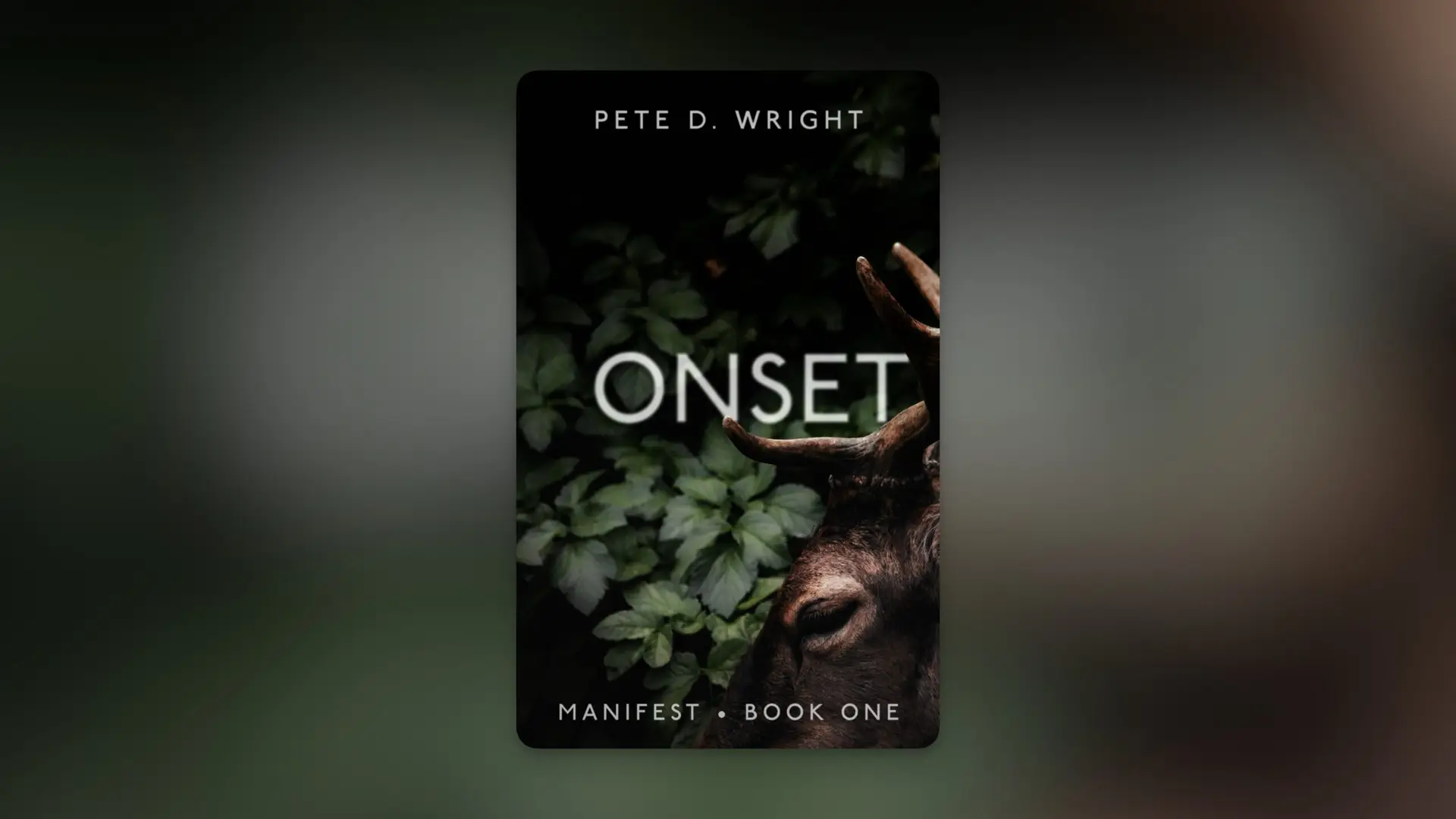
The first version of Onset began at the dinner table.
I don’t remember the exact night. I do remember the shape of the conversation. My kids were nine and thirteen, and we were talking about superpowers, which counted, at the time, as parenting.
The question was simple:
Would you rather be able to fly or turn invisible?
That question kept us busy. Flight gets you out. Invisibility lets you stay and not be found. I am sure we added strength and speed and telepathy and every other power we could remember from whatever we were watching or reading at the time. There was a lot of X-Men in the house, along with Avengers and Justice League.
I had history with this subject, unfortunately. When I was in college, my friends and I had a running bit about ridiculous superpowers. Frictionless Man, for example, who could not walk anywhere because he had no friction against any surface he touched. The Decarbonator, who ruined every party by walking into a room and making all the fizzy drinks go flat. There was also Captain Suicide, whose power was exactly what it sounds like and could only be used once.
I do not present this as evidence of sophistication. I was nineteen. Nineteen is a very specific social-emotional condition.
Those old dumb jokes and those dinner-table conversations were connected in my head. At nineteen, I thought superpowers were funny because every gift became ridiculous if you followed the logic two steps too far. Years later, talking with my kids, the same idea felt less like a joke. A power could be exciting. It could also show up at the worst possible time and make school on Monday a lot harder. Somewhere between Peter Parker and the fake-noir teenage seriousness of Brick, there was a version of adolescence I recognized.
Animal communication entered the conversation somewhere in there too. That one changes the tone. Flying and invisibility are about your own body. Talking to animals means the world is talking back.
That’s where the book started: kids with abilities, but not clean superhero abilities. Kids who might be able to do impossible things and still have to sit through a conversation with an adult who had already decided what was best.
I wrote the first draft during National Novel Writing Month. The book was fast and messy, which is both the point of NaNoWriMo and the hazard. I knew the kids had gifts they did not fully understand, and I knew the adults noticed too soon. I did not yet know what that meant.
Nobody read much of it. I think a few people read the first chapters. Nobody read the whole thing. I finished it, in the loose and highly celebratory way one finishes a NaNoWriMo draft, and then I put it away. For years.
I wasn’t mourning it. I had written a draft. I had proved to myself that I could get to the end. For a while, that was enough.
Then I finished Lattice.
That book had also been sitting around for a very long time. Getting it into publishable shape changed my relationship with old drafts. It gave me evidence, which is irritatingly useful, that an old file might not be useless to today’s Pete in the same way that it was to yesterday’s Pete.
So I opened Onset again.
The plot was a mess. The kids were not. Alya was still there, with ability in her before she knew what to do with it. Bemis was still there, partly because Bemis had refused to leave. He started in this book and then somehow became a character I have played for years in an ongoing D&D game. Not standard revision procedure, probably, but it did keep him alive in my head.
Natti was still there too, and her ability had become much more interesting to me than it was when I first wrote it. The first version treated it more like a power. The new version wanted to know what it would cost her.
Arthur came back differently. In the first version, I don’t think I understood him well enough. This time, I could see how badly he wanted to be decent, and how dangerous that can become when the system around you keeps rewarding obedience. Plus, it’s easier to write a middle-aged guy suffering through the complexities of relating to others when you’re a middle-aged guy doing just that.
The old draft wanted to be an adventure. The new one kept asking why adults get so good at making control sound so stupidly reasonable. I also realized, somewhere in the middle of the revision, that Onset was book one. This was inconvenient. I had set out to finish an old draft, not start a three-book project. Still, by the time I reached the ending, I did not buy it as an ending.
I like that more than I expected. Dark fun is still fun.
Short version: dinner-table superpower arguments, dumb college jokes, NaNoWriMo, and enough confidence after Lattice to try again.
You can read more about the book here: