
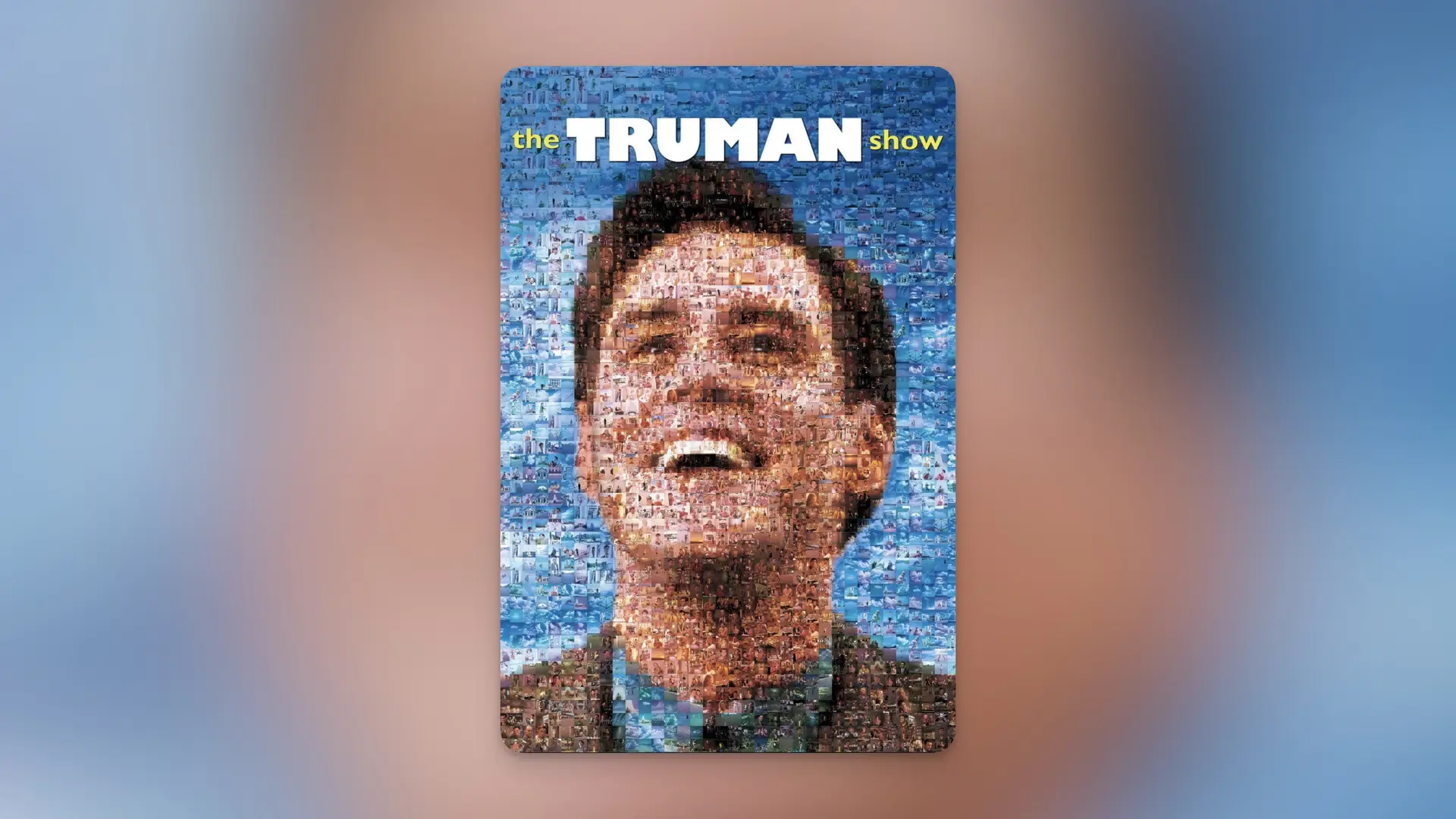
I have seen The Truman Show more times than I can responsibly admit, and it’s never felt like the same movie twice. Some of that is me. Most of it is the movie. In 1998, this was an immaculate what-if: a man discovers his entire life is a television show. Now it is some stupid Tuesday on YouTube or Instagram or TikTok. And it’s “short.” The premise that used to ask for suspension of disbelief now just asks for a phone, a ring light, and a terms-of-service agreement nobody reads. Jesus… is that a soapbox I’m on? Ugh.
Weir and Niccol make the trap work by refusing to put you outside it. You watch Truman from the bar, from the bathtub, from the couch, in the same dead-eyed little pockets of comfort as everybody else. Bathtub Guy has been soaking for what looks like seventeen hours. He’s comic relief. He’s a warning label. You’re sitting where he’s sitting. So when the signal dies and those same viewers blink, shrug, ask what else is on, the movie has already finished wagging its finger in your face. All that scale, all that machinery, all that love, undone the instant the audience gets what it wanted and reaches for the remote. No grand reckoning. No shame spiral. Of course you’re entertained.
The breakdown takes its time. A studio light drops out of a cloudless sky in the first ten minutes and gives away the entire game, and then Truman has to catch up to what we already know. He notices things after we do, never before, and that half-second gap keeps him human. He’s not a genius solving a puzzle. He’s a normal guy realizing normal has been constructed around him by union talent.
My favorite gear-change is the downtown elevator that opens onto craft services and a startled crew, the backstage caught with its pants down, right before security hauls Truman off for the crime of looking too closely. Carrey plays the suspicion without once tipping into the mugging he likely does in his sleep. The rubber face is still in there. The “good afternoon, good evening, and good night” is still a tool. But he’s just… somehow… rationed now. Aimed.
I was fully in the bag for Jim Carrey in this stretch, from In Living Color and The Mask through Ace Ventura and Liar Liar, and The Truman Show is where he got to leave everything on the field and stop listening to people who said the field was only there for flips and clown cars. Weir saw Chaplin in him and waited more than a year for him to finish The Cable Guy and Liar Liar rather than recast. After this, Man on the Moon and Eternal Sunshine of the Spotless Mind make sense in a way they don’t without it. He got to that work through a lot of pain, and you can feel the first reach of it right here.
Ed Harris builds Christof as a recluse who mirrors his own prisoner. He never leaves the moon-sized booth perched at the top of the dome. He pads around in a robe. He runs a broadcast that has not gone dark in ten thousand nine hundred and ten days and calls that love because abusers love vocabulary. He plays God as a father who cannot let the kid grow up. His final plea is not surrender. The moment Truman goes, Christof has to walk through a door of his own and in that hot second I truly believe Harris has Christof scared.
Harris also delivers my favorite piece of pure ego in the picture, the syrupy “I’ve always enjoyed engaging with past cast members” when Sylvia calls in to accuse him. What an ass. A perfect, velvet-voiced, climate-controlled ass.
Marlon stands with Truman on the pier and swears he would step in front of a bus for him, that the one thing he would never do is lie, and he says it while Christof feeds him every word through an earpiece. Truman’s best friend for life, sincerity on demand, scripted in real time. Whatever Truman has to rebuild on the far side of that exit, the hardest piece is not going to be geography. It’s going to be trust. How do you believe another human being after learning your oldest friendship had a showrunner? It’s a mean little scene in a movie full of big public cruelty.
The satire is there. The prophecy is there. The media studies syllabus has been stapled to this thing for twenty-eight years. But The Truman Show is finally a movie about a man discovering that his consent was taken before he was old enough to give it, and choosing to take it back. He doesn’t blow up the dome. There are no big speeches. He finds the stairs, climbs to the painted horizon, turns and bows to the audience one last time, and steps out into weather he has never felt on his skin. Simple. Almost embarrassingly beautiful.
Peter Biziou shoots the film through buttonholes, dashboard peeks, fisheye corners, all the little places a camera can hide and still feel plausible. Seaside, Florida plays Seahaven with no dome required, a master-planned town already built to feel like a memory of an America that never existed. It’s the same civic fantasy that built Disney’s Celebration down the road. And in a detail that has aged into its own private joke, the house standing in for Truman’s belongs to the Gaetz family, childhood home of the disgraced congressman, white picket fence and a sign that reportedly still reads “The Truman House.” America volunteered that ridiculous punchline.
Every time I put it on, I have the same experience I had at the beginning, and I get an absurd amount of joy handing it to someone who has never seen it. Here is a movie about a guy walking out of a story other people were profiting from, released the year before Big Brother, in a country that went on to elect the goddamned genre.
The film saw us coming, called its shot, and still believed one decent man might find the exit.