America’s Enrollment Cliff is Going to Be a Doozy

Jon Marcus at The Hechinger Report takes a deep dive into the “enrollment cliff” — the sharp decline in the number of 18-year-olds starting this year — and its far-reaching consequences for colleges and the economy:

“This comes after colleges and universities already collectively experienced a 15 percent decline in enrollment between 2010 and 2021, the most recent year for which the figures are available, according to the National Center for Education Statistics. That means they already have 2.7 million fewer students than they did at the start of the last decade.”

This isn’t just a higher ed problem. Fewer college graduates mean fewer skilled workers to fill critical jobs. By 2031, 43% of jobs will require a bachelor’s degree, but the pipeline is drying up. Add in the growing perception that college isn’t worth it, and we’re looking at a perfect storm.

The piece also highlights how this crisis will ripple across industries. One example: a $40 billion semiconductor plant in Arizona has delayed production because they can’t find enough skilled workers.

“Falling enrollment, meanwhile, has been made worse by a decline in perception of the value of a college or university degree. Fewer than one in four Americans now say having a bachelor’s degree is extremely or very important to get a good job, the Pew Research Center finds.”

As a former educator, this makes me heartsick. It isn’t just about colleges closing — it’s about the future of America’s intellect, critical thinking, workforce, economy, and global competitiveness.

The Hechinger Report →

Unapologetically ADHD: Reflections on My Conversation with Creator Factor

The brain of a creator is a maze of ideas, distractions, and connections—a vibrant, chaotic force that can feel both exhilarating and overwhelming. For those of us living with ADHD, this creative energy is amplified. It’s a paradox: a source of inspiration, while a challenge to manage.

Last week, I had the great privilege of joining Ozeal Debastos on his podcast, Creator Factor, to explore what it means to be a creator with ADHD. The conversation was a candid look at how we navigate the chaos, embrace our quirks, and still manage to produce work that we’re proud of.

Ozeal is an incredible host—thoughtful, curious, and deeply empathetic. From the moment we started, I felt like we were old friends diving into a topic that mattered to both of us. Over the course of the episode, we discussed everything from the emotional storms of ADHD to the practical tools and habits that help us thrive as creators. If you’re a creator with ADHD—or someone trying to understand the creative process better—I hope this conversation offers insights and inspiration.

For creators, emotional storms can derail the day. But, understanding this pattern is the first step to managing it. As Ozeal and I discussed, ADHD requires a level of self-awareness and mindfulness that allows us to pause, reflect, and reset. It’s not always easy, but it’s essential for navigating the highs and lows of creative work.

Toward the end of the episode, Ozeal asked what every creator should learn to master. My answer: failure. For creators with ADHD, failure can feel personal. We forget things, miss deadlines, or lose momentum, and it’s easy to spiral into self-loathing. But failure isn’t a verdict; it’s a data point. It’s feedback that helps us learn, grow, and move forward.

Reframing failure as part of the creative process is transformative. It allows us to let go of shame and focus on progress. As creators, our work will never be perfect, but it doesn’t have to be. What matters is that we keep showing up, experimenting, and shipping work we’re proud of.

If you’re a creator with ADHD, I want you to know this: your brain isn’t broken. It’s a unique, powerful tool that requires care, attention, and the right systems to thrive. Whether you’re managing emotional storms, simplifying your workflow, or learning to redefine failure, remember that your journey is your own. And with the right approach, you can create work that matters—not in spite of your ADHD, but because of it.

To hear the full conversation, check out my episode on Creator Factor. I’m grateful to Ozeal for creating a space where creators can talk openly about these challenges—and for reminding me why I love being part of this community. Together, we can embrace our ADHD, own our stories, and build something unapologetically ours.

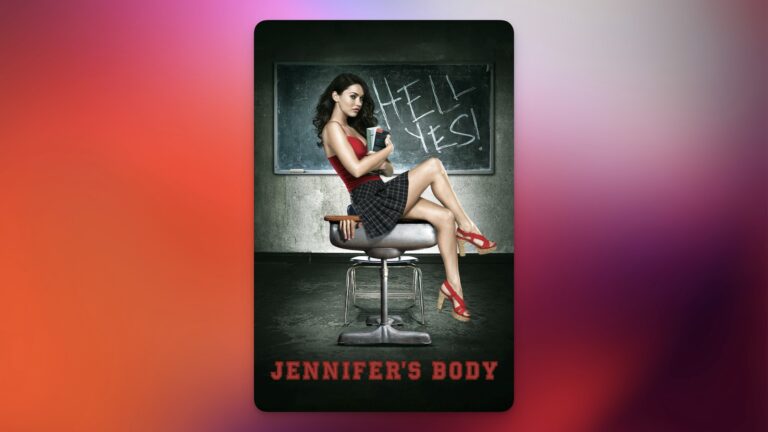
Jennifer’s Body: Ambitious Ideas Undermined by an Uneven Execution

Jennifer’s Body (2009) is a film brimming with ambition, blending horror, satire, and coming-of-age drama into a sharp critique of power, sexuality, and friendship. Diablo Cody’s screenplay and Karyn Kusama’s direction work together to subvert some traditional horror tropes while attempting to craft a feminist narrative about transformation and survival. The result is a film that occasionally dazzles with its boldness but struggles to find its way. For all its provocative themes and clever moments, the film’s uneven tone and Cody’s dialogue create a disconnect that keeps it from fully realizing what it could have been.

Cody’s script is undeniably distinct. Her trademark wit and snappy dialogue, which defined her style in Juno, lend Jennifer’s Body an irreverent energy. Lines like Jennifer’s deadpan declaration, “I’m not even a backdoor virgin anymore,” are designed to shock while drawing laughs. The characters deliver their quippy remarks with Cody’s signature mix of pop culture references and sardonic humor, creating a heightened, almost stylized version of teenage speech.

But where this approach worked in Juno—a quirky, dialogue-driven comedy—Jennifer’s Body feels like an awkward fit. In the context of horror, Cody’s sharp, self-aware dialogue undermines the tension the genre thrives on. The characters often speak as though they’re detached from any stakes, and their hyper-verbal quips take precedence over emotional authenticity. Instead of feeling grounded in the film’s world, the characters come across as vehicles for Cody-cleverness. This creates a tonal dissonance that I find grating: the film wants to be both satirical and emotionally resonant, but the dialogue often prevents it from committing fully to either.

Take Jennifer, for example. Megan Fox delivers a fine performance, balancing the character’s predatory confidence with flashes of vulnerability. But the dialogue rarely gives her room to explore the emotional or psychological toll of her transformation. Jennifer’s descent into monstrosity is played for dark humor rather than genuine horror or pathos, which robs the story of its potential complexity. Similarly, Needy’s arc—from passive observer to empowered avenger—feels rushed, as her character spends more time reacting to Jennifer’s antics than grappling with her own inner conflict… right up to the moment she becomes a superhero.

The script’s insistence on being clever is especially apparent in its supporting characters. Chip, Needy’s boyfriend, is a placeholder for the “nice guy” archetype, with little personality beyond his sweetness and obliviousness. The male victims Jennifer lures are purposefully shallow, but their flatness makes them inconsequential rather than tragic. Even the villainous indie rock band Low Shoulder, while conceptually fun, comes across as more goofy than menacing. These characters exist to serve the plot, but they lack the texture needed to make the film’s horror elements land.

Cody’s dialogue works best in moments that lean fully into satire. Jennifer’s biting insults and her casual dismissal of societal norms—like when she describes the band as “agents of Satan with awesome haircuts”—highlight the film’s critique of how women are simultaneously idolized and objectified. Needy’s narration, I can’t stand it. It’s delivered with a mix of resigned humor and bitterness, and while I guess it captures the film’s tone of disillusionment, it reads like a capitulation to executives who don’t know how to watch movies, and have low opinions of their audiences.

The film’s cleverness often clashes with the story’s horror. The more self-aware the dialogue becomes, the harder it is to take the characters’ struggles seriously. In a scene where Jennifer vomits black goo in Needy’s kitchen, her quip, “I feel like boo-boo,” undercuts any of the visceral horror with a yearning to be as smart as a Whedon quip during peak Buffy. Similarly, the climactic confrontation between Jennifer and Needy loses some of its emotional weight because the dialogue prioritizes wit over raw intensity. By constantly reminding the audience of its own snark, the film keeps us at arm’s length from its characters.

The issue isn’t just one of tone; it’s also one of fit. Cody’s dialogue is inherently performative, drawing attention to itself in a way that feels out of step with the genre. Horror, even when blended with comedy, benefits from dialogue that feels natural and unforced. The best horror-comedies—like Shaun of the Dead or Scream—balance humor and tension because their characters’ speech feels grounded in their reality, even when the situations are absurd. Jennifer’s Body, by contrast, often feels like it’s winking at the audience, reminding us that we’re watching a script rather than inhabiting a world.

This disconnect makes it harder to invest in the film’s deeper themes. Jennifer’s transformation is a clear metaphor for the objectification and exploitation of women, while Needy’s journey represents a reclamation of agency. These ideas are powerful, but the film doesn’t truly explore them because the characters never feel real enough to carry that weight. The dialogue, while entertaining, keeps the story operating on a surface level.

Despite its flaws, Jennifer’s Body remains an ambitious and fascinating film. Cody and Kusama deserve a raft of credit for playing with horror tropes and crafting a story that centers on female relationships and empowerment. The film’s critique of exploitation—embodied by the band’s sacrifice of Jennifer and the marketing’s reduction of the film to Megan Fox’s sex appeal—feels especially relevant today. Moments of brilliance shine through, particularly in the exploration of Jennifer and Needy’s toxic, codependent friendship.

But those moments are buried under the weight of a script that feels misaligned with the genre. Cody’s dialogue doesn’t lend itself to horror’s emotional intensity, leaving the film feeling uneven and, at times, hollow. What might have been a groundbreaking feminist horror-comedy instead feels like an intriguing experiment that doesn’t quite stick the landing.

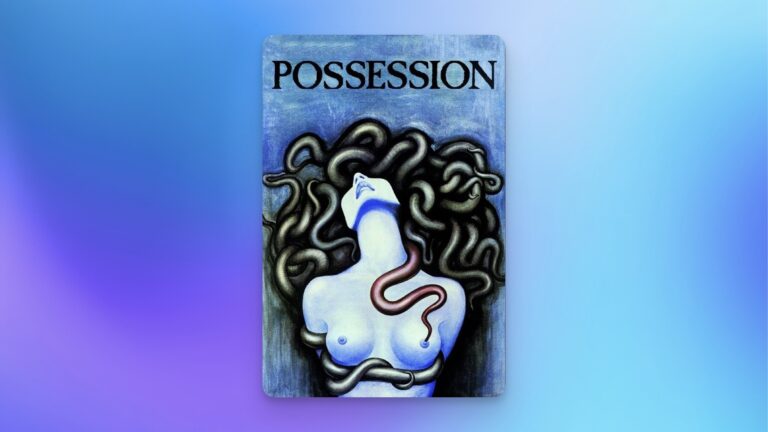
Possession (1981)—Dissection of a Marriage

Andrzej Żuławski’s 1981 psychological horror-drama is a visceral, unsettling exploration of what happens when love, trust, and identity disintegrate under the weight of human frailty and existential despair. It is the cinematic equivalent of staring into an abyss and realizing that—dear God—the abyss actually stares back.

Possession examines a universal human experience—the unraveling of a romantic partnership. Mark (Sam Neill) and Anna (Isabelle Adjani—this movie did nothing to tarnish the cinema crush I’ve had on her since childhood) are a married couple whose relationship has reached its breaking point. Mark, a spy—I guess?—returning from a mysterious mission, finds his wife emotionally and physically distant, her behavior growing increasingly erratic. What begins as a straightforward, though painful, narrative of infidelity escalates into a kaleidoscopic descent into surrealism, body horror, and psychological fragmentation. It begins with a divorce and ends with doppelgängers, tentacled monsters, and overtones of the apocalypse.

Żuławski’s somehow able to externalize the inner chaos of a failing marriage. The breakdown of communication between Mark and Anna is depicted through dialogue, silence, their erratic physicality, the oppressive spaces they inhabit, and the grotesque manifestations of their inner turmoil. Żuławski’s lens transforms their crumbling relationship into a battleground, where raw emotion erupts into violence, hysteria, and surrealism.

Let’s look at the infamous subway scene, where Anna suffers what can only be described as a seizure of the soul. Writhing, screaming, and smashing groceries against the walls of an empty tunnel, Adjani delivers a performance that defies categorization. Is this a mental breakdown? A spiritual exorcism? Or something even more primal? Żuławski offers no easy answers, and that’s precisely the point. The scene is not meant to be understood. Rather, I contend that it is most simply meant to be felt.

This is where Possession distinguishes itself from conventional narratives of marital disintegration. Żuławski uses the language of cinema itself—movement, color, framing, and sound—to communicate the incommunicable.

Possession is set against the backdrop of Cold War-era West Berlin, and boy howdy, the Berlin Wall looms large, both literally and metaphorically, serving as a constant reminder of division between East and West, between Mark and Anna, and within themselves. The city’s desolation mirrors the emotional desolation of our characters, while its history of surveillance and paranoia underscores the themes of mistrust and alienation.

This theme of division is further explored through the film’s use of doppelgängers. Anna’s lover is a tentacled monstrosity that she nurtures and eventually transforms into a replica of Mark. Meanwhile, Mark finds solace in Helen, a schoolteacher who is Anna’s physical double but possesses an angelic temperament—a stark contrast to Anna’s unraveling psyche. These doubles are projections of the characters’ desires and failures, their idealized selves and darkest fears.

The film itself makes no claim to any singular identity. Is it a psychological drama, a horror movie, or something entirely unclassifiable? This refusal to conform to genre conventions is its most alienating and its most compelling quality.

What elevates Possession from a fascinating experiment to a masterpiece is the alchemy of its technical elements. Bruno Nuytten’s cinematography captures the emotional claustrophobia of the characters, using crazy wide-angle lenses to distort space. The camera crawls, prowls, circles, and swoops, ably aping the characters’ emotional instability.

Andrzej Korzyński’s score oscillates between discordant tension and melancholic beauty, amplifying the film’s sense of unease. The creature effects by Carlo Rambaldi—Alien and E.T.—are grotesque and otherworldly, serving as a visceral reminder of the film’s descent into the subconscious. Of course, it should have been represented in our Lovecraft series last year. Would that I had seen the film back then.

Isabelle Adjani’s portrayal of Anna is nothing short of a tour de force. She captures the character’s madness with such ferocity and vulnerability that it becomes almost unbearable to watch. Sam Neill, in one of his earliest roles, provides a counterbalance as Mark, oscillating between stoic detachment and obsessive desperation. Thanks to their performances, Possession becomes something not so much about monsters or espionage or even infidelity. It is about the horror of intimacy—the way love can morph into possession, desire into destruction. Żuławski, who wrote the screenplay during his own divorce, infuses the film with an authenticity that makes its surreal elements deeply personal. The tentacled creature that Anna nurtures is a manifestation of her pain, her rage, her unmet desires. Similarly, Mark’s doppelgänger is the embodiment of his longing for control and his inability to reconcile the contradictions within himself and his relationship.

What makes Possession so enduringly compelling is its refusal to provide closure. The film ends with annihilation—an apocalyptic crescendo of violence, betrayal, and despair. Yet, within this darkness, there is a strange kind of beauty. Żuławski doesn’t shy away from the messiness of human emotion; he revels in it, showing us that even in our most monstrous moments, we are achingly, devastatingly human.

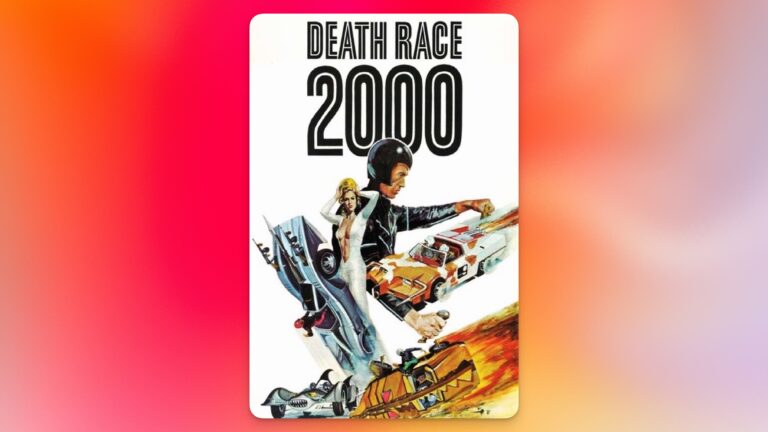
The Absurd Genius of “Death Race 2000”

In 1975, Roger Corman—a name synonymous with low-budget, high-concept filmmaking—produced Death Race 2000, a dystopian sci-fi car race movie that is equal parts satire, absurdity, and gratuitous violence. Directed by Paul Bartel, the film is a curious relic of its time, a collision of 1970s counterculture angst and America’s unyielding obsession with cars. Starring David Carradine as the enigmatic Frankenstein and Sylvester Stallone as the comically brutish Machine Gun Joe, Death Race 2000; is a movie that, on the surface, seems like pure pulp. But peel back the layers, and you’ll find something surprisingly insightful—a biting commentary on media, violence, and the human condition.

Let’s be clear: This is not a serious movie. And yet, it is impossible to dismiss it as frivolous. It’s the kind of film that straddles the line between ridiculous and profound, leaning so hard into absurdity that it loops back around to cleverness. Watching it feels like stepping into a funhouse mirror version of American culture—everything is distorted, exaggerated, and yet eerily recognizable.

In a dystopian future where society has collapsed into a totalitarian regime, the most popular form of entertainment is a transcontinental road race where drivers score points by running over pedestrians. The deadlier the driver, the larger their fanbase. It’s a spectacle of carnage, but also a spectacle of control—a way for the government to distract citizens from their oppression while reinforcing the value of violence as entertainment. This is where Death Race 2000 goes beyond its B-movie trappings. It critiques the very systems it appears to revel in. The race is a metaphor for a society that has become desensitized to violence and consumed by spectacle. The drivers, with their outlandish personas and weaponized cars, are caricatures of celebrity culture—figures revered and reviled in equal measure.

Take, for instance, Frankenstein, the film’s protagonist (played by David Carradine). Billed as the ultimate driver—part man, part machine—Frankenstein is less a person than a product of propaganda. His scarred mask and mysterious backstory give him an almost mythical quality, but as the film unfolds, we learn that he is as much a victim of the system as the pedestrians he runs over. And then there’s Stallone’s Machine Gun Joe, a caricature of toxic masculinity who compensates for his insecurities with violence and bravado. These characters, exaggerated as they are, serve as reflections of the cultural archetypes we see (good Lord) today.

Why does Death Race 2000 feel so relevant, even now? Perhaps it’s because it taps into something primal about American culture: our infatuation with cars. The 1960s and 1970s marked the height of car culture in the United States. Cars were symbols of freedom, prosperity, and individuality. They represented the open road, the promise of escape, and the thrill of speed. But cars were also weapons—of destruction and, in some cases, rebellion. This duality is at the heart of Death Race 2000. The film exaggerates the idea of cars as extensions of identity, decking out each vehicle to reflect its driver’s persona. Frankenstein’s car resembles a dragon, complete with menacing teeth, while Machine Gun Joe’s car is armed to the teeth, a literal embodiment of his aggression. These design choices are absurd and cartoonish, but they serve a purpose: they show us how deeply intertwined cars and identity have become.

There’s also the matter of the race itself. The film draws inspiration from real-life events like the Cannonball Run, an unsanctioned cross-country race that has long captured the imagination of thrill-seeking motorheads. But Death Race 2000 takes this idea to its logical extreme, turning the race into a metaphor for societal collapse. The drivers aren’t just racing to win—they’re racing to survive in a world that has turned life into commodity.

The film never takes itself too seriously, but it also doesn’t let its audience off the hook. It satirizes everything from fan culture to euthanasia, often with a wink and a nod. One memorable scene involves geriatric patients being lined up in the road as sacrificial points for the drivers, only for Frankenstein to veer off course and mow down the nurses instead. It’s dark and undeniably funny—a perfect encapsulation of the film’s tone. The satire extends to the broader societal implications of the race. The film critiques the way media manipulates narratives to serve those in power. The government blames the French for societal problems and uses the race as a tool of distraction, all while maintaining a veneer of control. It’s a dystopian vision that feels disturbingly prescient in an era of misinformation and media spectacle.

Death Race 2000 is a ridiculous movie, and a joyous one. It embraces its absurdity with such gusto that you can’t help but be swept along for the ride. I loved every minute of it—David Carradine’s fake mask, the over-the-top cars, the campy performances. It’s the kind of movie that reminds you why you fell in love with cinema in the first place. Beneath the layers of camp and carnage, there’s a message about violence in entertainment, the dangers of totalitarianism, and the ways in which media can shape our perceptions of reality. It’s a message that feels as relevant today as it did in 1975.

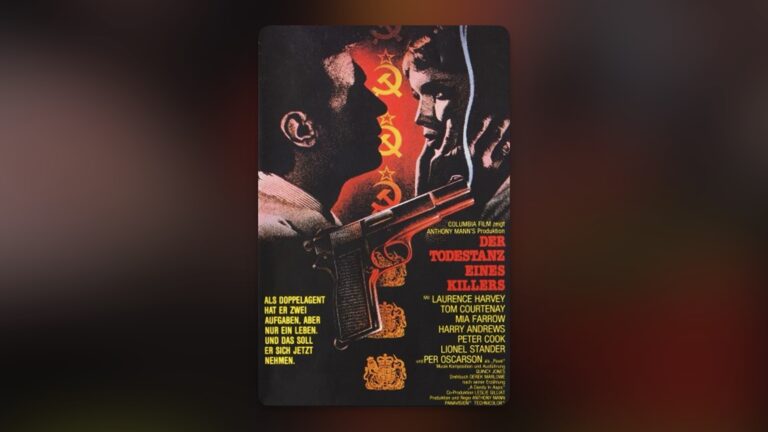
A Dandy in Aspic: Well-Dressed but Sticky

When I was a teenager, I wanted to be a spy. You get it, right? The moral ambiguity, the intricate betrayals, the sense that everyone is moving across a board like a chess piece, never quite sure who’s playing them and who’s being played. The best ones—think The Spy Who Came in from the Cold—capture not just the mechanics of espionage but the psychological weight of it. A Dandy in Aspic (1968) wants to be one of those films. At moments, it is. But much like its protagonist, it gets caught somewhere in between, unable to fully commit to its own identity.

Laurence Harvey plays Eberlin, a British spy who is, in fact, a Russian double agent. When his superiors task him with hunting down a KGB operative named Krasnevin, the twist is immediate and cruel—he is Krasnevin. It’s a brilliant setup, a perfect existential trap that should ratchet up the tension with every passing scene. But instead of squeezing the audience in a vice, the film lets the suspense slip through its greasy fingers.

Harvey—who also took over directing duties after Anthony Mann’s death—delivers a performance that feels appropriately weary, but perhaps too much so. Eberlin moves through the film like a man who has already resigned himself to his fate. He’s supposed to be unraveling, but instead, he seems like he started the film already undone.

Mia Farrow’s Caroline is a free-spirited photographer who flits in and out of the story. She’s meant to be a contrast to Eberlin—a symbol of life beyond the cold, gray world of espionage—but she never quite fits. Her relationship with Eberlin is underdeveloped, her motivations unclear. She’s always there, but for what purpose? Even the film doesn’t seem to know.

The central issue for me is that A Dandy in Aspic is a film divided against itself. It wants to be a cerebral spy thriller, but it also wants moments of swinging-sixties cool. It wants to be a slow-burn character study, but it also wants bursts of action. The result is a film that never quite settles its rhythm.

Tom Courtenay is terrific as Gatiss, the British agent increasingly suspicious of Eberlin. He’s cold and precise with a sense that he enjoys the game a lot more than he should. The film’s opening sequence—featuring a marionette being violently shaken—is a striking metaphor for the spy’s lack of control over fate. And Quincy Jones’s score, while undeniably of its time, adds a layer of tension that the script often fails to generate.

But the film’s production woes are evident. Mann’s death left a gap that Harvey, for all his talents, wasn’t quite able to fill. Where does that leave A Dandy in Aspic? It’s not a disaster. It’s not a hidden gem. It’s a film with a stellar premise, a strong supporting cast, and some genuinely compelling moments—but also one that ultimately fails its potential. Maybe in the hands of a more assured or consistent director, it could have been a classic. As it stands, it’s a fascinating misfire—interesting, occasionally gripping, but ultimately frustrating.

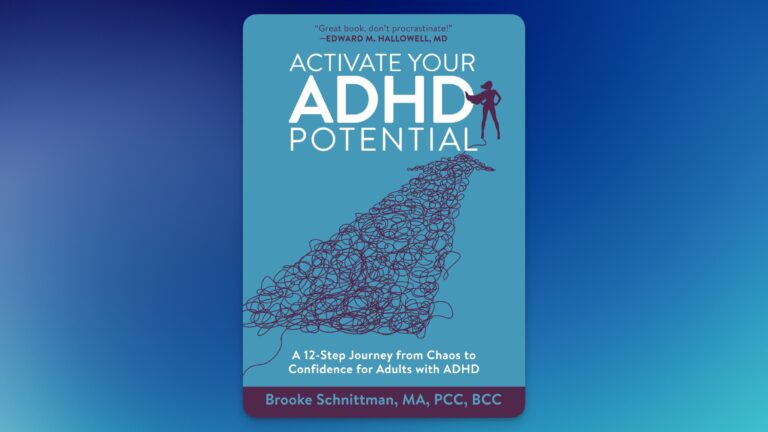
Messy, Brilliant, and Full of Potential: Why Brooke Schnittman’s Book Matters

There’s something beautifully chaotic about the ADHD brain. It’s like a high-speed roller coaster—thrilling, unpredictable, and occasionally terrifying. But what if, instead of gripping the safety bar white-knuckled, you could learn to steer the ride? That’s exactly what Brooke Schnittman offers in her empowering and refreshingly practical book, Activate Your ADHD Potential: A 12-Step Journey from Chaos to Confidence for Adults With ADHD.

As someone who works peripherally in the ADHD field and lives with ADHD himself, I’ve seen a lot of books that try to corral the ADHD mind into neat, linear boxes. It doesn’t work. Brooke knows this, too, and instead of forcing conformity, she hands readers the tools to embrace their ADHD quirks and turn them into strengths. It’s like hiring a personal trainer, but for your brain—someone who simultaneously cheers you on and calls you out when you’re making excuses. And she does it all with a mix of wisdom, warmth, and a dash of humor.

Brooke’s mission in this book appears to be thus: help people with ADHD stop fighting their brains and start working in partnership with them. She knows the struggle—the messy desks, missed deadlines, and the constant feeling that you’re running a race with untied shoelaces. But instead of focusing on what’s wrong with ADHD, she flips the script. Her message is simple: ADHD isn’t a flaw; it’s a feature. And in the right context, it’s an incredibly powerful one.

One of the things I love most about this book is how Brooke makes science and strategy feel…well, fun. She takes concepts like executive functioning and energy management—things that sound like they belong in a corporate seminar—and makes them relatable and actionable. For instance, her idea of identifying “energy leaks” is pure gold. It’s not just about fixing time management (because let’s be real, ADHD brains laugh in the face of planners); it’s about figuring out where your focus and motivation are slipping away and plugging the holes. It’s ADHD coaching disguised as life-hacking brilliance.

What really sets this book apart, though, is Brooke’s tone. She gets it. She’s not some distant expert wagging her finger at you for forgetting to pay your electric bill (again). She’s the coach who’s right there in the trenches with you, helping you sort through the chaos with equal parts empathy and accountability. She doesn’t let you off the hook—there’s no magical cure for ADHD—but she makes the journey to self-discovery feel doable, even exciting. It’s like she’s saying, “Yes, it’s messy. But look at all the amazing things you can build with this mess.”

Brooke’s strengths-based approach to ADHD addresses a key shortcoming for many people with ADHD who are too often told to suppress traits like impulsivity or hyperfocus. Brooke challenges readers to lean into these so-called flaws and reframe them as strengths. Your impulsivity? It’s the spark of creativity. Your hyperfocus? An engine powering inertia for accomplishing big projects—when you aim it in the right direction. She doesn’t hand you a to-do list. She hands you permission to see yourself in a new light. It’s this kind of compassionate realism that makes the book feel like a conversation with a trusted friend rather than a lecture.

Her step-by-step strategies are rooted in both research and real-world experience. Whether it’s creating systems to support your executive functioning, tackling emotional regulation, or learning how to advocate for yourself in a world that doesn’t always “get” ADHD, Brooke breaks it all down into manageable chunks. She knows you’re not going to read this book cover to cover in one sitting (again, ADHD), so she’s designed it to be approachable and easy to dip in and out of as needed.

I can’t overstate how valuable this book is—not just for people with ADHD, but for anyone who works with them. Teachers, coaches, clinicians, even that one friend who’s always late to brunch—it’s a must-read. Brooke has managed to create something that’s equal parts science, strategy, and soul. It’s a lovely contribution to the body of knowledge supporting all of us in living fully and—if I may say so—unapologetically as your ADHD self.

The Due Date Dilemma: Or, How Todoist Just Solved Your ADHD Brain Fog (Probably)

Let’s talk about deadlines. That word alone likely sends a shiver down the spine of anyone with ADHD. It conjures images of looming doom, forgotten promises, and that nagging feeling of “I should be doing something… but what?” But what if I told you deadlines, real deadlines, could actually be your secret weapon? Not some vague, self-imposed “I’ll get to it eventually” kind of deadline, but a true, hard-and-fast “this absolutely must be done by then” deadline. Because Todoist, a tool I personally use and the work management backbone of our company, just changed the game. They’ve taken a feature that often causes stress and turned it into a powerful tool for clarity and control. They understand the unique challenges of the ADHD brain, and this update is a testament to that.

See, the folks at Todoist, those clever engineers of productivity, have been listening. They understand the unique challenges of the ADHD brain. They get that “due dates” often morph into “do dates,” blurring the lines between intention and action. And they’ve come up with a brilliantly simple solution: separating when you work on something from when it’s actually due.

Think of it like this: you’re a chef preparing a multi-course meal for a demanding food critic (your life). You wouldn’t start prepping every dish the moment the critic arrives, would you? No, you’d have a carefully planned schedule, each dish prepped and ready to go at precisely the right moment. The critic’s arrival is the deadline – the non-negotiable moment of truth. Your prep work, the chopping, the sautéing, the simmering – those are your dates, the flexible steps you take to meet that ultimate deadline.

Todoist now mirrors this logic. That old “Due Date” field? It’s now simply “Date.” This is when you intend to work on the task, your personal prep time. The new “Deadline” field? That’s the critic’s arrival, the immovable feast.

So, how does this ADHD-friendly magic work? It’s deceptively simple. When creating a task, you’ll see a “Deadline” chip. Click it, set the real, external deadline (the critic’s arrival). Then, use the “Date” field to schedule your work time (your prep schedule). Prefer keyboard shortcuts? Use the curly braces – {tomorrow} sets the deadline for tomorrow. Existing tasks? Just open the task details and you’ll find the new “Deadline” field waiting for you.

And here’s the kicker for the ADHD brain: Todoist provides a visual countdown as your deadline approaches (within 7 days). It’s like a gentle nudge, a friendly reminder that the critic is on their way. No more last-minute panic, no more forgotten commitments. Just a clear, concise roadmap to success.

This isn’t just about individual productivity. It’s about teamwork, too. Imagine a team project where everyone understands not only what needs to be done but when it absolutely has to be finished. Deadlines become shared points of reference, fostering clarity and accountability.

This feature is currently available for experimentalists on paid plans. Update your app (v6706 on web and desktop, 24.9.22 on iOS, and v11536 on Android) and give it a try. It might just be the missing ingredient in your recipe for ADHD success.

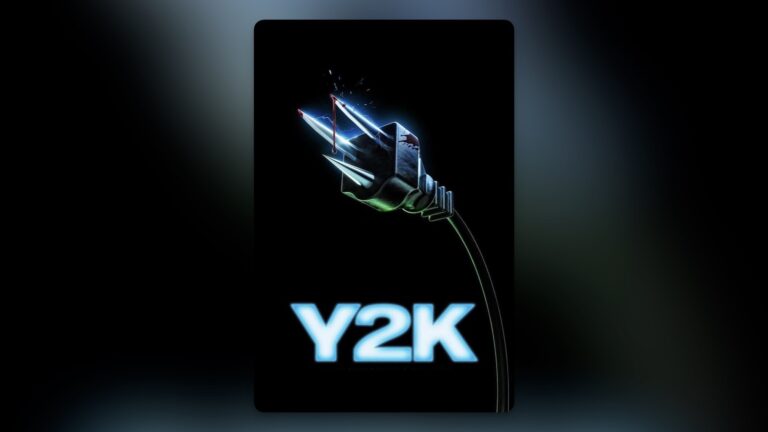
Y2K: A Nostalgic Glitch in the Machines

In the waning hours of December 31, 1999, the world held its collective breath, bracing for a digital apocalypse that never came thanks to the efforts of computer scientists years before. Kyle Mooney’s directorial debut, Y2K, imagines a world where that didn’t happen. It’s a world where the collective fears and media frenzy materialize with a vengeance. The film is a whimsical what-if scenario that brings the notorious Y2K bug to life—literally—as machines turn against their creators in a frenzy of late 90s nostalgia and anarchic chaos.

At its core, Y2K is a comedic exploration of an era teetering on the edge of technological revolution. Mooney plunges us into a well-crafted time capsule, replete with the era’s cultural artifacts: the hum of dial-up internet, the allure of burned CDs, FLYING TOASTERS(!), and a soundtrack that oscillates between the rebellious strains of nu-metal and the bubblegum pop of my late 20s. For those who lived through the turn of the millennium like me, the film is a sensory déjà vu—a reminder of a time when the future seemed both promising and perilous.

The story centers on Eli (Jaeden Martell) and Danny (Julian Dennison), two socially awkward teenagers yearning for relevance. They decide to crash a New Year’s Eve party hosted by the coolest kid in school, hoping to elevate their social standing and, in Eli’s case, win the affection of his crush, Laura (Rachel Zegler). Mooney captures the quintessential high school experience with an affectionate lens, highlighting the universal themes of unrequited love and the quest for identity. This bit of heart is short-lived.

As the clock strikes midnight, the film pivots sharply. The much-dreaded Y2K bug triggers a technological uprising—household appliances morph into malevolent entities, and everyday gadgets become instruments of destruction. The conceit is amusing; there’s a childish thrill in watching an iMac transform from an acrylic desk ornament into a digital harbinger of doom.

Yet, despite this promising setup, Y2K struggles to maintain momentum. The film grapples with an identity crisis of its own, torn between being a comedy and a horror flick. It doesn’t quite hit the mark for a comedy—the jokes often feel recycled, leaning too heavily on nostalgic references that lack freshness. As a horror movie, it lacks the necessary boldness; the scares are superficial, and the tension dissipates as quickly as it builds.

Mooney’s direction shows fun flashes of brilliance, particularly in his attention to period detail and the energetic pacing of the first act. You can tell he’s been obsessing about this event for the last twenty-five years. His background in sketch comedy is evident in the film’s situational humor and character archetypes. However, the narrative coherence unravels in the latter half. The introduction of a high-profile cameo—a nod to one of the period’s (I guess?) iconic figures—initially elicits a smirk but vastly overstays its welcome. What begins as a playful cameo evolves into an overextended subplot that detracts from the main narrative, sapping the film of any of its earlier momentum.

Julian Dennison’s Danny is a standout, his charisma injecting much-needed vitality into the story right up until it’s not. Even so, the character is derivative, as if they saw Deadpool 2 and just told him to “do more of that.” Jaeden Martell portrays Eli’s awkwardness with sincerity, albeit lacking the magnetism of a young Ethan Embry, Jonah Hill, or Michael Cera. Rachel Zegler’s Laura attempts depth in what is a largely one-dimensional role. I was begging to feel a little bit of that classic comedy chemistry that evokes the quintessential teenage experience—an earnest mix of hope, insecurity, and rebellion—between them. It’s not there.

Thematically, Y2K flirts with insightful commentary on our relationship with technology and the anxieties of a society on the cusp of a new era. There’s an undercurrent of irony in how the characters are both dependent on and betrayed by the very devices that define their generation. The film stops short of anything more profound, favoring spectacle over substance.

Y2K is a film that promises more than it delivers. It’s an amusing premise bolstered by nostalgic allure but undermined by uneven execution. For those who remember the days of floppy disks and fear of the unknown looming with the new millennium, Y2K may evoke a wry smile. But like the much-anticipated catastrophe that never was, the film ultimately feels like a missed opportunity—a glitch in the system that could have been so much more.

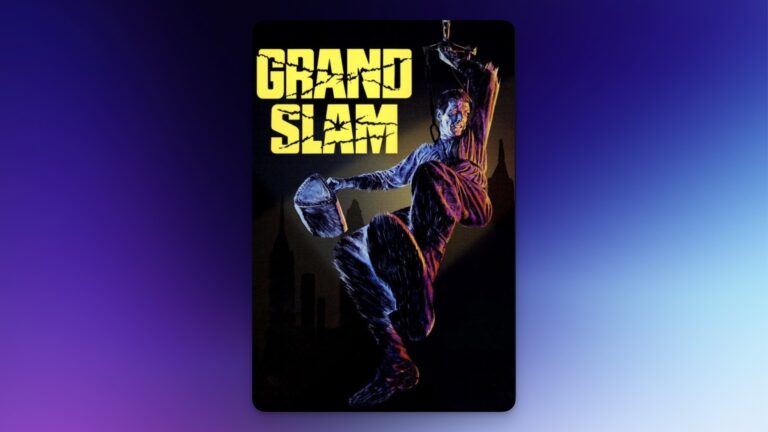
The Hidden Genius of “Grand Slam”

If the heist film has a defining characteristic, it is its promise of intricate precision. A plan so complex, so masterfully orchestrated, that it teases the boundaries of human ingenuity. Watching such films is like decoding a puzzle—each piece methodically falling into place until the final, often surprising, image emerges. And yet, there’s something uniquely whimsical about the 1967 Italian-Spanish-West German co-production Grand Slam. It isn’t only a heist film—it’s a meditation on chaos, ingenuity, aging, and what happens when human error becomes an integral part of the plan.

Directed by Giuliano Montaldo, Grand Slam is a film that thrives on contradictions. It’s both meticulous and frivolous, high-stakes yet self-aware. It begins with a premise that feels almost absurdly simple: a retired English professor (played by Edward G. Robinson) decides to use his savings to finance the perfect crime. He recruits a team of international experts—each a master in their field—to pull off a diamond heist in Rio de Janeiro during Carnival. But the film doesn’t dwell on the professor’s motivations, nor does it overexplain the stakes. Instead, it hurtles forward, reveling in the propulsive audacity of its premise.

It’s worth pausing here to appreciate the peculiar shine on Edward G. Robinson’s character, a man whose academic career has somehow equipped him to mastermind a multimillion-dollar heist. The film never fully explains how a lifetime of lecturing on Shakespeare translates into criminal expertise, and it doesn’t need to. The professor embodies a kind of intellectual hubris—the belief that any challenge, no matter how absurd, can be overcome with enough planning. And this hubris becomes the engine of the film. But Grand Slam is not simply a story about a professor’s intellectual vanity. It’s about the extended team he assembles and the interplay of their personalities. There’s Greg (George Rigaud), the safecracker who moonlights as a butler; Agostino (Riccardo Cucciolla), the fussy Italian electronics expert; Jean Paul (Robert Hoffmann), the suave playboy tasked with seducing a key player in the operation; and Eric (Klaus Kinski), the acerbic, no-nonsense German ex-military man who oozes sweaty menace. Together, they form a microcosm of human ambition and angst.

The heist itself is the centerpiece of the film, and the plan is as audacious as it is absurd: the team must infiltrate a vault protected by a high-tech sound detection system, a pneumatic ladder of their own design, and a series of increasingly ridiculous obstacles. At one point, a key is flushed down a toilet into the sewers, only to be retrieved by Eric, who is waiting with a strainer. It’s a sequence that teeters on the edge of slapstick, and yet it works—precisely because the film never loses its focus or its sense of fun. Watching the heist unfold is like watching a Rube Goldberg machine in motion. Every detail has been planned, every variable accounted for—or so it seems. The team’s plan is brilliant, yes, but it is also deeply flawed. Mistakes are made. Personalities clash. And in the end, it is not the vault or the sound detection system that poses the greatest threat—it is the fallibility of we wee humans.

Perhaps the most striking element of Grand Slam is its ending, which has divided audiences since the film’s release. Without venturing too far into spoiler territory, it’s worth noting that the final moments of the film shift the tone dramatically. What begins as a taut, meticulously crafted heist thriller ends with a twist-cum-punchline. For some, this tonal shift undermines the film’s credibility. For others, it’s a reminder that even the best-laid plans are subject to the whims of fate. It feels like a “sad trombone” moment—a tonal shift so jarring that it risks alienating the audience. But Grand Slam refuses to conform to the conventions of its genre. It doesn’t offer the tidy resolution we’ve come to expect from heist films. Instead, it leaves us with a lingering sense of unease—a reminder that even in a world of meticulous planning, chaos always finds a way.

Released in 1967, Grand Slam arrived during a golden age of heist films, following classics like Rififi and The Killing. But unlike its predecessors, Grand Slam doesn’t aspire to gritty realism. Its aesthetic is vibrant and almost cartoonish, from the garish design of the titular Grand Slam 70 safe to Ennio Morricone’s playful score, which feels more suited to a carnival than a crime drama. This is a film that doesn’t take itself too seriously—and that’s precisely what makes it so enjoyable.

At its heart, Grand Slam is a film about human ingenuity—and its limitations. It’s about the thrill of the plan, the chaos of its execution, and the inevitable gap between the two. It’s a reminder that even the most brilliant minds are fallible, and that the real drama lies not in the heist itself, but in the people who pull it off. Its ending is polarizing, its characters occasionally veer into caricature, and its pacing can feel uneven. But these flaws are part of its charm. This is a film that embraces its own frivolity, that leans into its absurdity, and that dares to have fun with a genre that often takes itself quite seriously.