“After the Fox” is Who?

What do we expect from a heist movie? Perhaps the thrill of a master plan coming together? A sly protagonist outwitting everyone in their path? Or maybe, just maybe, the satisfaction of seeing the precise mechanics of deception unfold like clockwork? Vittorio De Sica’s 1966 film After the Fox doesn’t care much for those expectations. Instead, it turns the genre on its head, delivering a comedy that—while uneven—dares to poke fun at the very ideas of success, celebrity, and the film industry itself.

At first glance, it’s an anomaly. De Sica is a master of Italian neorealism, whose Bicycle Thieves is enshrined in cinematic history as a heartbreaking portrait of postwar struggle. And yet, here we are. Somehow, he found himself directing a frivolous, madcap heist comedy starring Peter Sellers. How did this happen? Some say it was necessity—De Sica reportedly needed money to fund his gambling habit? Others point to Peter Sellers himself, who lured the legendary director into this peculiar partnership. Whatever the reason, After the Fox exists as a curious footnote in the careers of both men—one that begs us to reconsider what we expect from great artists when they step outside their comfort zones.

The story revolves around Aldo Vanucci, a.k.a. “The Fox” (Peter Sellers), a master thief who escapes from prison to pull off a daring heist: smuggling gold stolen during “the Cairo job” into Italy. But here’s the twist: Vanucci decides the best way to transport the gold is by disguising the heist as a movie production, complete with a faux director, a washed-up Hollywood star (Victor Mature as Tony Powell), and the help of his wide-eyed sister Gina (Britt Ekland). What follows is less a heist movie and more a satire of the film industry, celebrity culture, and the absurd lengths we go to for validation.

A Film That Plays by Its Own Rules

It’s important to note: After the Fox doesn’t try to be a traditional heist movie. In fact, it almost seems to forget it’s a heist movie altogether. By the time the third act arrives, we’re less concerned about the gold and more caught up in the chaos of Vanucci’s fake film production. This is a movie that meanders, that delights in tangents, and that often feels like it’s making itself up as it goes along.

This looseness is part of its charm. The film is stuffed with brilliant comedic moments: Sellers’ Vanucci, masquerading as the flamboyant, neorealist director “Federico Fabrizi,” barking nonsensical orders at the villagers of a small Italian town who are swept up in the excitement of movie-making. Or Mature’s Tony Powell, an aging actor desperate to reclaim his youth and dignity, battling his agent over whether he can still pass as a leading man. Every scene is laced with a sly wit and a knowing wink—an acknowledgment that this is all one big, ridiculous charade.

Perhaps the most fascinating dynamic in After the Fox is the way it skewers its own creators. De Sica, who once embodied the pinnacle of serious, socially conscious filmmaking, allows himself to be parodied here. In one particularly biting moment, a character dismisses “neorealism” as simply meaning “no money.” It’s a self-aware jab, one that lets us in on the joke: even the greats aren’t above a bit of silliness when the situation calls for it.

The Peter Sellers Paradox

At the center of it all is Peter Sellers, an actor whose genius for comedy is matched only by his knack for transformation. Sellers is at his best here, slipping seamlessly into disguises and personas, from the suave Fabrizi to the bumbling burglar. There’s a joy in watching him work, a sense that he’s having as much fun as the audience. But there’s also a hint of melancholy—a sense that Sellers, like Vanucci, is always performing, always hiding behind a mask.

This duality is part of what makes Sellers such a compelling actor. He’s a chameleon, capable of vanishing into any role, but you never quite reach him. Even in his most outlandish moments—slathered in bubbles while escaping from prison or directing a chaotic car chase—there’s a vulnerability that lingers beneath the surface.

A Satire of Celebrity and Success

What further elevates After the Fox is its sharp commentary on the absurdity of fame. The film lampoons everyone: the egotistical director, the washed-up actor, the starstruck fans who scream at every passing car regardless of who’s inside. In one hilarious sequence, a crowd gathers to watch Tony Powell arrive in town, only for someone to ask, “Who is it?” “I don’t know … but it’s someone famous!”

It’s a moment that feels timeless, a reminder that our obsession with celebrity hasn’t changed much in the decades since. De Sica and screenwriter Neil Simon (in his first screenplay) use humor to expose the hollowness of fame, but they do so with a light touch. The film never feels mean-spirited; instead, it invites us to laugh at ourselves and the ridiculous ways we chase validation.

The Flaws That Make It Human

After the Fox is messy, the pacing uneven, and the third-act courtroom scene feels like an afterthought. Critics at the time dismissed it as a “jumble,” and they weren’t entirely wrong. But there’s something endearing about its imperfections. This is a film that refuses to take itself seriously, that embraces its own chaos and invites the audience to do the same. Watching it is like stumbling upon a forgotten gem in a dusty corner of the cinema vault. It’s not polished or pristine, but it sparkles in its own peculiar way. It’s a film that makes you laugh, makes you think (albeit briefly), and leaves you humming its absurdly catchy theme song long after the credits roll.

The Legacy of a Delightful Oddity

In the end, After the Fox is less about the heist and more about the humanity behind it. It’s a film about people pretending to be something they’re not—criminals pretending to be filmmakers, an actor pretending to be young, a thief pretending to be a hero. And in that pretense, it finds its truth. De Sica may have made this film for a paycheck, but in doing so, he created something unexpectedly profound: a comedy that reminds us of the joy in failure, the beauty in absurdity, and the power of a good disguise. After the Fox may be flawed, but it’s a damned delightful romp that deserves a healthy cult status. Sometimes, it’s okay to just have fun.
The Sum of All Fears Gets Lost in a Bureaucratic Maze

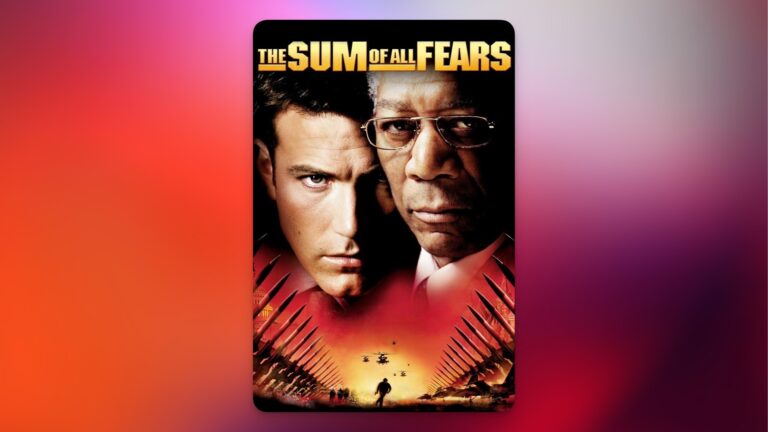
Here’s the thing about The Sum of All Fears: I’d largely forgotten it. Poof. Gone. Like a rogue agent swallowed whole by the bureaucratic machinery of the CIA. Re-watching it, I was struck, not by the oh-so–2002 anxieties of nuclear terrorism, but by how strangely empty the whole thing felt. It’s a film striving for Clancy-esque gravitas, for the intricate ticking clock of geopolitical tension, but ending up like a jigsaw puzzle with some pieces missing.

This is a movie caught in a weird limbo. There’s just no other way to say it: Ben Affleck’s Jack Ryan is perpetually overshadowed by the ghost of Harrison Ford. He’s not bad, per se. He’s got that Affleck charm, that movie-star wattage. But he’s miscast, like a finely tailored suit on the wrong body. It subtly, insidiously, throws the whole thing off. Yes, this is a younger Ryan. But Afflec is not a younger Ford.

Our villains are a pre–9/11 fever dream of neo-Nazis swirling their brandy snifters and plotting… something. It’s so Bond-villain-lite that it’s almost funny. The irony is that in trying to avoid one geopolitical hot potato the filmmakers landed squarely in another: narrative incoherence.

Then there’s the administrivia. The sheer inability of characters to connect, the endless loop of “I can’t get ahold of him!” is baffling. Lazy narrative? Sure. It’s also a sign that the filmmakers themselves were lost in the bureaucratic maze they were trying to depict and landed on the one sure-fire way to throw in a roadblock to build tension: make the phones broke.

Amidst this mess, there are sparks. Liev Schreiber’s John Clark, for example, is a beacon of quiet competence in a film desperately needing some. He’s the character I remember, the one that hints at the taut thriller The Sum of All Fears could have been.

So, three stars. Not because it’s actively terrible, but because it’s a film of missed opportunities. Like a half-remembered dream, it leaves you with a nagging sense of “what if?” What if they’d stuck with the book’s plot? What if they’d cast Schreiber as Ryan? What if, what if, what if… .

Clear and Present Danger

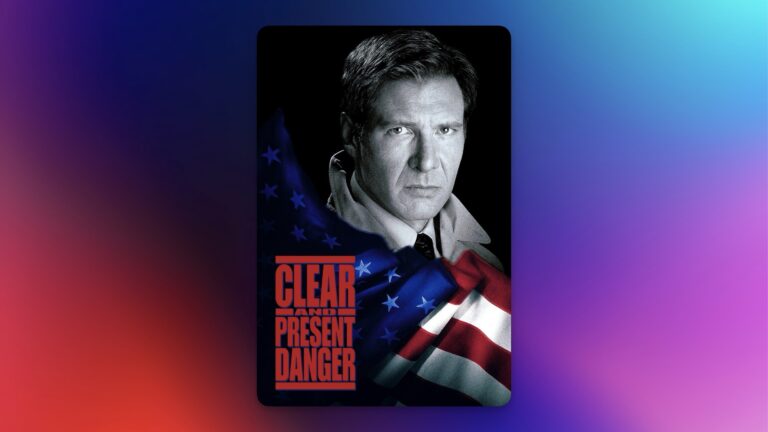
We tend to think of heroes as forged in fire, individuals molded by extraordinary circumstances into something… more. But what if the truly compelling figures, the ones who resonate most deeply, are those who stumble into heroism? Those who navigate the world with a mix of competence and clumsiness, only to find themselves at the center of events far larger than themselves? You know, regular Joes and Janes like you and me? Believe it or not, this is what Phillip Noyce’s 1994 thriller, Clear and Present Danger gets right… maybe even more than the two adaptations that came before it. 

Harrison Ford’s Jack Ryan is even less the polished action hero of Patriot Games. He’s a policy wonk, an analyst thrust into the chaotic realm of covert operations in the scary drug war. He’s a reply-all guy. He’s smart, capable, but there’s a palpable sense of improvisation, a constant feeling that he’s figuring things out as he goes along. This makes him more relatable, more human this time around.

For example, the setting: Washington D.C. Not the glamorous, romanticized D.C. of fictionalized political dramas, but a D.C. of fictionalized bureaucratic infighting, hushed hallway conversations, and the constant hum of power. Ryan is more at home here. He understands the language of policy papers and interagency rivalries. He’s comfortable in the world of ideas, not explosions. This familiarity with the mundane is a blind spot. He doesn’t see the cracks in the system, the subtle deviations from protocol that hint at something deeper, something rotten.

The film’s central conflict, a clandestine war against Colombian drug cartels, unfolds not in a flurry of gunfire and car chases but in a series of increasingly uncomfortable meetings, tense phone calls, and furtive glances exchanged across crowded rooms. Sure, there is real danger in the cartel itself, but even more so in the insidious erosion of trust, the blurring of lines between right and wrong within the corridors of power. 

James Earl Jones, the ailing Admiral Greer, serves as a poignant counterpoint to Ryan’s accidental heroism. Greer represents the old guard, the embodiment of experience and wisdom wrapped in IVs and terrycloth. His few scenes in the film bring a quiet dignity, a passing of the torch from one generation to the next, even when he was begging Ryan for some more current porn.

The supporting cast, including Willem Dafoe as the beady-eyed John Clark, further enhances the film’s nuanced portrayal of the intelligence community. I’m writing that sarcastically, of course. He’s subtle, you know, for him, but there’s always room for cartoonish villains and two-dimensional sidekicks. So, sarcastic, yeah, but from a place of love. 

Clear and Present Danger is a two-eye-winking satire about abuses of power and unchecked nationalism made all the more hilarious by the disconnect between the profoundly unsexy Ryan and the whirlwind of sexiness he gets caught up in. High-stakes covert ops, smokin’ hot Colombian mercenaries, even some low-key flirting. All while poor everyman Ryan just wants to be back at Langley analyzing columns of data.

Yet that’s exactly what makes Clear and Present Danger so great – it’s self-aware almost to a fault about its own genre trappings. Even as it spoofs well-worn espionage cliches, there’s an underlying warmth and sincerity to the core message about the importance of civic duty and accountable leadership. It plays the hits like it’s on the big stage at Red Rocks.

It reminds us that sometimes, sure, it’s amusing watching a fish-out-of-water like Jack Ryan get tangled up in high-stakes skullduggery. But at the end of the day, we all have an obligation to be accidental patriots of conscience when our leaders go rogue. And we can’t help but crack up imagining schlubby ol’ Jack somehow being the unlikely guy to save America from itself. This Jack, he’s my Jack, and I’m here for it.

“Caged Heat” and the Paradox of Exploitation Cinema

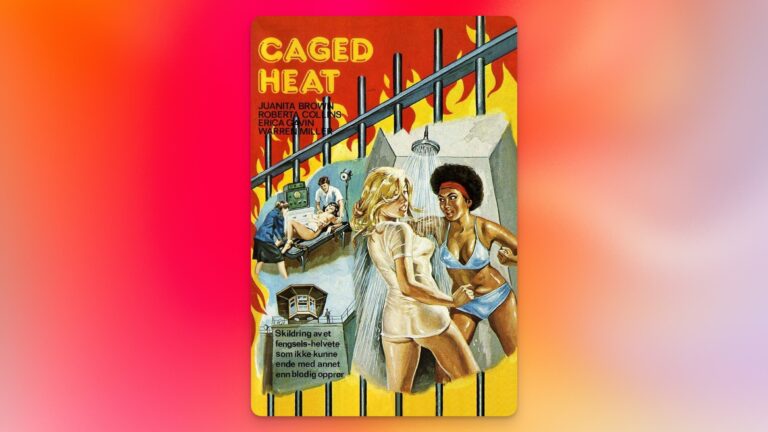
In the labyrinth of cinematic history, there exists a peculiar subgenre that both revels in and critiques the very notion of confinement: the women-in-prison film. “Caged Heat,” Jonathan Demme’s 1974 directorial debut, stands as a curious artifact within this realm. It is a film that attempts to straddle the line between exploitation and social commentary, yet often finds itself ensnared in the very clichés it seeks to transcend.

Imagine a tapestry woven with threads of institutional oppression, unchecked authority, and the visceral quest for freedom. These are heavy themes, weighty enough to anchor any serious drama. Demme, with the audacity of a novice and the ambition of an auteur, endeavors to infuse these elements into a genre not typically known for its subtlety or depth.

At the heart of Caged Heat lies an exploration of power dynamics, particularly the unsettling ways in which authority can corrupt and dehumanize. The casting of Barbara Steele as the prison’s warden is quite a subversion. Steele, renowned for her roles in Gothic horror, brings an eerie gravitas to the role. Her character is not the archetypal male oppressor but a woman wielding power with a cold detachment, challenging the audience’s preconceived notions about gender and authority.

The film touches upon the disquieting realities of unethical medical practices and the psychological toll of incarceration. Scenes of forced shock therapy and invasive medical examinations are jarring, almost surreal in their intensity. These moments hint at a deeper critique of the prison-industrial complex and the ways in which institutions can strip individuals of their autonomy and humanity.

Yet, for all its aspirations, Caged Heat cannot escape its foundational trappings. The film often indulges in gratuitous nudity and hyper-sexualized portrayals of its female characters. Slow-motion sequences of inmates showering or engaging in borderline exploitative scenarios serve as stark reminders of the genre’s baser appeals. The juxtaposition of these elements with the film’s loftier themes creates a dissonance that is difficult to reconcile.

One might argue that this very dissonance is intentional—a commentary on how women’s bodies are commodified and controlled both within and outside the prison walls. However, the execution lacks the finesse required to fully realize such a complex critique. The film oscillates erratically between earnestness and exploitation, leaving the viewer uncertain about its true intentions.

The pacing is uneven, with moments of intense introspection abruptly giving way to action-packed sequences that feel almost farcical. Dreamlike vignettes are interspersed throughout, rich with symbolism yet oddly disconnected from the core narrative. These artistic flourishes suggest a director eager to experiment, to push the boundaries of conventional storytelling—even if the results are a mixed bag.

Caged Heat fails to fully commit to a singular vision. It is neither a straightforward exploitation film nor a cohesive social commentary. Instead, it occupies a liminal space, hinting at potential depths without ever truly diving in. This half-measured approach renders the film less impactful than it might have been had it embraced one direction wholeheartedly.

Moreover, the very existence of the women-in-prison genre raises questions about society’s voyeuristic tendencies. Why do audiences gravitate toward narratives that place women in positions of vulnerability and subjugation? Caged Heat doesn’t provide answers, but it does reflect a cultural moment—a time when such stories were not only accepted but proliferated.

It’s worth noting that Demme would go on to direct films of significant acclaim, honing his craft and exploring themes with greater nuance. “Caged Heat,” then, can be seen as a formative work—a canvas upon which Demme experimented with ideas and techniques that he would later refine.

In the final analysis, Caged Heat is a film that intrigues but does not satisfy. Its ambitions are evident, and there are glimpses of what could have been a profound exploration of systemic injustice. However, these glimpses are overshadowed by formulaic genre conventions and an overreliance on sensationalism.

For those interested in the evolution of Jonathan Demme as a filmmaker, or in the idiosyncrasies of 1970s cinema, Caged Heat offers a window into a particular time and place. But as a standalone work, it falls short—a mosaic of mismatched pieces that never quite coalesce into a cohesive whole.

I watched this as Andy and I covered it as our latest member bonus on The Next Reel’s Film Podcast. Learn more and subscribe to the show here. Thank you!

★★☆☆☆

Trap is Trapped in its Own Cage

I haven’t been to many arena shows, but of the total, three of them were Prince. They’re incredible. Twenty thousand screaming fans, pulsating lights, the deafening roar of amplified music. This, the very essence of a modern pop spectacle, is the setting for M. Night Shyamalan’s latest thriller, “Trap.” It’s a promising premise, a high-concept thriller with a built-in ticking clock. And yet, as does a punctured balloon, the film quickly loses its air, leaving behind a limp, floppy, unsatisfying experience.

“Trap” follows Cooper, played by a game but ultimately misused Josh Hartnett, a seemingly ordinary dad attending a Lady Raven concert with his daughter. But Cooper harbors a dark secret: he’s the Butcher, a notorious serial killer. The authorities, aware of his presence, have set a trap, turning the concert into a high-stakes game of cat and mouse. That’s the set-up. That was also the trailer.

The problem with “Trap” isn’t the concept itself. It’s the execution, which feels appropriately clumsy for Shyamalan, whose recent films have all carried a similar set of frustrations. The film suffers from a series of baffling creative choices, starting with the perplexing decision to reveal the central twist early on. This deflates any sense of suspense, leaving the film meandering through a series of increasingly improbable scenarios.

Shyamalan employs a distracting technique throughout the film, having his actors stare directly into the lens during key moments of dialogue. This awkward fourth-wall breaking (I don’t know what else to call it), rather than adding intrigue, pulls the viewer out of the story. It’s a stylistic flourish that feels both unnecessary and detrimental to the film’s overall tone. In a thriller, where immersion is crucial, this technique feels particularly jarring.

And then there are the performances, which, with the notable exception of Ariel Donoghue as the daughter, range from wooden to unconvincing. Hartnett, despite his efforts, struggles to embody the duality of his character. The script, lacking in nuance, offers little support, and the direction seems to exacerbate the stiffness. There’s a palpable disconnect between the words on the page and the emotions on screen, leaving the performances feeling hollow and inauthentic.

Even the film’s strengths are ultimately undermined by its weaknesses. The concert setting, initially promising, is poorly utilized. The cinematography, oddly fixated on the arena’s jumbotrons, creates a sense of distance, robbing the scenes of their potential energy. And the music, while effectively capturing the pop concert vibe, feels disconnected from the narrative.

The truth is that we never needed to meet Lady Raven at all. We didn’t need most of the third act. The film strayed from its shallow roots when it left the arena, a setting so perfectly unsettling I’m stymied how the filmmakers were able to misuse it so.

“Trap” is a film that feels trapped by its own limitations. See what I did there? Nailed it. It’s a missed opportunity, a thriller that lacks thrills, a suspense film devoid of suspense.

Patriot Games

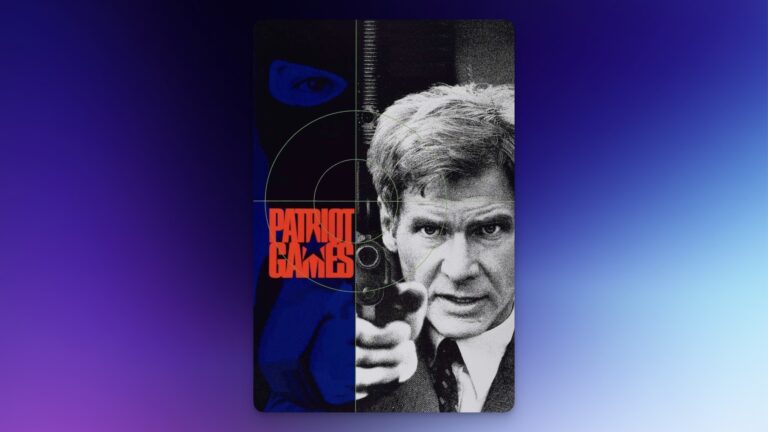
In revisiting Phillip Noyce’s 1992 thriller Patriot Games, I’m hit with a curious paradox: a film both undeniably engaging and … strangely hollow. Like a meticulously crafted Swiss watch, all the pieces are present and functioning, yet the overall effect lacks any real resonance. This isn’t to say the film is bad, per se. Noyce orchestrates the action sequences with a palpable tension, particularly the chilling home invasion scene, escalating dread without resorting to gratuitous gore. Donald McAlpine’s cinematography, known for its dynamism in films like Predator, here finds a more restrained authority, expertly capturing the claustrophobic terror of a family under siege.

However, the film’s clockwork precision also reveals its limitations. The narrative, adapted from Tom Clancy’s novel, feels streamlined to the point of simplification. The intricate geopolitical machinations of the book are reduced to a binary conflict of good versus evil, with little room for the moral ambiguities that have—from time to time—made Clancy’s work otherwise compelling. This simplification extends to the characters as well. Harrison Ford, taking over the role of Jack Ryan from Alec Baldwin, delivers a competent performance but lacks the youthful impetuosity that Baldwin brought to the character in The Hunt for Red October.

The supporting cast fares somewhat better. Sean Bean is captivating as the vengeful IRA operative, his simmering rage palpable in every scene. Richard Harris, however, is underutilized as the IRA leader, his considerable talents wasted on a thinly-written role that serves primarily as a mouthpiece for exposition. Ann Archer, as Ryan’s wife Cathy, is similarly underserved, her character relegated to the worried spouse trope.

I can’t help but wonder if the film’s flaws are a product of its time. The early 90s, still basking in the post-Cold War glow, were a period of unabashed American exceptionalism, and Patriot Games reflects this sentiment wholeheartedly. The film is a paean to American heroism, with Ryan embodying the ideal of the citizen-soldier, compelled to defend his country and family against the forces of chaos. This unwavering patriotism, while perhaps appealing to some, ultimately undermines the film’s dramatic potential. The villains are cartoonishly one-dimensional, their motivations reduced to a simplistic desire for revenge. The complexities of the Irish conflict, so richly explored in films like The Wind That Shakes the Barley (albeit from another time in the country’s history), are glossed over in favor of a black-and-white morality play.

The film’s climax, a chaotic boat chase, further exemplifies this tendency toward oversimplification. While visually impressive, the sequence strains credulity, pushing the boundaries of realism to the breaking point. It’s a fitting end to a film that prioritizes spectacle over substance, leaving us entertained but ultimately unmoved. Patriot Games is a perfectly serviceable thriller, but it fails to capture the depth and complexity of its source material. It’s a missed opportunity, a case of what could have been.

★★★☆☆ 🧡

The Hunt for Red October: One Ping Only, Please

The Cold War. Remember the Cold War? I was just a kid throughout and I’m sure at some level, I imagined that if we had sent blankets, we could have warmed them up. What we had instead was a prolonged, icy standoff between two superpowers, each clutching enough nuclear power to turn the planet into a cinder. It was a time of paranoia, of whispers in dimly lit rooms, of shadows moving just beyond the periphery of vision. And within that context, a specific, almost anthropological, curiosity emerged: the submarine thriller.

The Hunt for Red October, John McTiernan’s 1990 adaptation of Tom Clancy’s breakout novel, isn’t just a good submarine thriller. It’s a perfect submarine thriller. It scratches an itch I didn’t know I had, a yearning for a specific kind of tension, a claustrophobic cat-and-mouse game played out in the crushing depths of the Atlantic.

The film’s brilliance is in its explosions (natch), and its action sequences (so good), but in equal measure in its quiet moments. It’s in the hushed exchanges between Sean Connery’s Captain Marko Ramius and his officers, the subtle shift in Alec Baldwin’s Jack Ryan’s eyes as he pieces together the puzzle of Ramius’s intentions. It’s in the hum of the submarine’s engines, a constant, low-frequency thrum that vibrates through the audience, a physical manifestation of the pressure cooker environment these men inhabit.

Baldwin, in an early career-defining role, embodies Ryan’s intellectual agility. He’s not a seasoned field agent; he’s an analyst, a bookworm. He is potential. Later films struggle with finding the same balance in the character that Baldwin captures out of the gate.

Connery. What can be said about Connery that hasn’t already been carved in cinematic lore? The beard, the swept-back silver hair – it’s a follicular masterpiece, a testament to the power of a good grooming regimen, even in the face of impending nuclear war. This is Connery at his most Connery-esque, a performance for the ages.

McTiernan’s direction is masterful, balancing the technical intricacies of submarine warfare with the human drama unfolding within the steel confines of Red October. The film’s pacing is impeccable, slowly ratcheting up the tension until the final, breathtaking climax. The underwater sequences are particularly impressive, even by today’s standards, standing as a testament to the ingenuity of the pre-CGI era.

The Hunt for Red October is a Cold War thriller. It’s a study in leadership. It’s a meditation on loyalty. And it’s a thrilling exploration of the human capacity for both good and evil.

The Relentless Sculptor

It’s a peculiar thing, time. We talk about it as a constant, a drumbeat marching us forward, yet there are these mornings … mornings where it feels like the world is holding its breath, like the second hand on the clock is frozen in amber. On my dog walk this morning, I was confronted by a profound sense of gratitude. Gratitude for the intricate tapestry of this community, the threads of connection that bind us together, the shared laughter and quiet support that make life richer and more meaningful. It’s a feeling of belonging, of being held by something larger than yourself. To scroll through and see the faces, to feel the pulse of this shared existence – it’s a gift, a precious anomaly in the vastness of the universe.

Within gratitude, there’s also the reassuring presence of loved ones, the sheer, improbable luck of health. It all feels so fragile, so perfectly balanced, that I almost fear to exhale. It’s the kind of stillness that whispers of impermanence.

Because we know, deep down, in that place where my anxieties like to gather, that this stillness is an illusion. Time is a relentless sculptor and is always at work, chipping away, reshaping. We might perceive it as static in these quiet moments, but the truth is, it’s a river, constantly flowing, carrying us along whether we’re ready or not. For example, two years will come and go in a blink. A fleeting moment, like a hummingbird’s wings against the morning light. And just like that, the landscape will shift again. The familiar contours of our lives, the things we cling to for stability – including this very community – will rearrange themselves yet again in small ways and large. The spectre of change, that shadowy figure we try to ignore, will step into the light, demanding our attention.

There’s no contract, no guarantee that what lies on the other side of that blink of time will be easy, that the path forward will be clearly marked and free of obstacles. The complexities of life, the inevitable tangles and uncertainties, will undoubtedly persist. But this, too, is part of the shared human experience. And within this community, within the bonds we’ve forged, lies a quiet strength, a collective resilience. We’ll face whatever comes, not alone, but together, navigating the unknown with the shared wisdom, the helping hands, and the unwavering support that defines who we are. We’ll figure it out, somehow. It’s what we do. It’s the quiet promise whispered in the stillness of mornings like this one. It’s the strength we get to draw from the knowledge that we are not alone in the current of time.

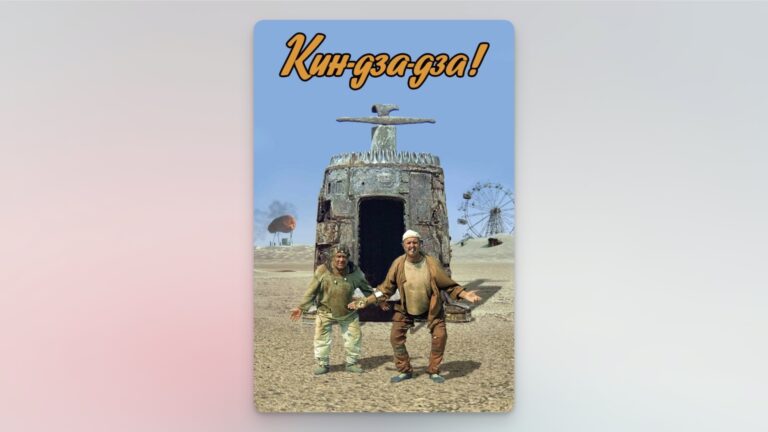
Kin-dza-dza! Ku to You and You and You

The matchstick is an unremarkable object, easily overlooked, readily discarded. Yet on the desert planet Pluke, it is a prized possession. It’s a symbol of wealth and power, the very engine of the economy. This is the central paradox of Kin-dza-dza!, a 1986 Soviet film that uses the seemingly trivial to illuminate the profound.

The film follows two unwitting Muscovites, Uncle Vova, a foreman with a worldview as solid as a concrete slab, and Gedevan, a sort-of violinist with a head full of melodies, who stumble through a portal to Pluke. It’s a world of rusty spaceships, telepathic aliens, and a rigid social hierarchy. It’s here, amidst the sand dunes and scrap metal, that Daneliya, the film’s director, constructs a brilliant, if slightly off-kilter, social experiment.

For example, take the word “Ku.” On Pluke, it is the linguistic equivalent of a Swiss Army knife, a single word deployed to express a multitude of meanings. It’s a testament to the power of context and a demonstration of how meaning is shaped not just by words themselves but also by the subtle cues of intonation and body language. I suspect it’s also a sly commentary on the doublespeak and empty rhetoric that permeated Soviet society.

These sand-blasted eccentrics, the inhabitants of Pluke, are divided into two castes: the Chatlanians and the Patsaks. The distinction, determined by a flashing light on a handheld device, is arbitrary and nonsensical. Yet it dictates every aspect of their lives, from the clothes they wear to the rituals they perform. It’s a stark reminder of how easily humans can be manipulated and how readily we embrace even the most absurd social hierarchies.

But Kin-dza-dza! isn’t just a political satire. It’s a film that explores the universal human experience, our longing for connection, and our search for meaning in a world that often seems devoid of it. Adrift in this alien landscape, Uncle Vova and Gedevan become stand-ins for all of us, grappling with the complexities of human interaction, the challenges of communication, and the search for belonging.

The film’s genius lies in its ability to blend the fantastical with the familiar. The spaceships, cobbled together from junk, are a testament to human ingenuity, a symbol of our ability to create something from nothing. And the landscape of Pluke, desolate yet strangely beautiful, becomes a mirror to our own world, reflecting our anxieties about environmental degradation, social inequality, and the uncertain future of our planet.

Kin-dza-dza! is a film that rewards close attention but doesn’t demand it. It’s a film that challenges our assumptions, provokes our thinking, and stays with us… or it’s an afternoon on a playground. It’s a testament to the power of storytelling, the enduring appeal of the strange and the wonderful. Or, it’s just plain fun.

★★★★☆ 🧡

Halloween III: Season of the Witch Misunderstood the Assignment

Okay, here we go. That’s right, I’m still working my way through my Halloween reviews. It is, at last, the Season of the Witch.

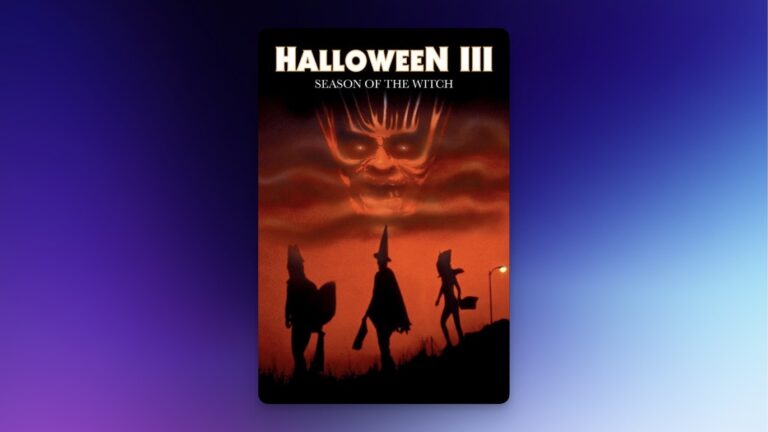
Every now and again, we get these moments in which filmmakers take audacious leaps, diverting from the expected to explore the uncharted. “Halloween III: Season of the Witch” is one such endeavor—a film that steps away from the familiar path of its predecessors, attempting to redefine a burgeoning franchise. Directed by Tommy Lee Wallace, this 1982 installment eschews the iconic Michael Myers entirely, opting instead for a standalone narrative that intertwines ancient rituals with modern technology. Bold choice.

At its core, the film presents a tantalizing premise. Dr. Daniel Challis (Tom Atkins) and Ellie Grimbridge (Stacey Nelkin) find themselves embroiled in a sinister plot orchestrated by the enigmatic Conal Cochran (Dan O’Herlihy), owner of the Silver Shamrock Novelties factory. The company’s Halloween masks, embedded with fragments of Stonehenge and infused with dark magic, naturally, are set to unleash devastation upon unsuspecting children nationwide. It’s a narrative that fuses capitalism’s exploitative tendencies with the lurking dread of technological overreach—a concept satisfyingly prescient for its time.

Despite the ingenuity of its storyline, “Season of the Witch” struggles under the weight of its franchise’s legacy. By the time of its release, I wager audiences had grown accustomed to the silent menace of Michael Myers speed-walking in the shadows. The first two “Halloween” films had firmly established a formula—a slasher archetype that fans eagerly anticipated. To then pivot so drastically in the third installment was jarring, leaving viewers disoriented and, apparently, disappointed. Had this narrative been introduced as a second film, or even as an entirely separate entity unburdened by the “Halloween” moniker, it might have been received with greater enthusiasm.

The film’s thematic ambition is certainly commendable. It sits at the intersection of ancient pagan rituals and contemporary consumer culture, highlighting how mass media can become a vessel for nefarious purposes. We get it. The unsettling imagery of children donning cursed masks, entranced by hypnotic television broadcasts, though, that’s a stark commentary on blind consumerism and the vulnerabilities of youth. This blend of folklore and science fiction creates an atmosphere thick with suspense and moral inquiry.

While the overarching idea is innovative, its execution sometimes feels constrained—more suited to a small-screen production than a feature film. The narrative pacing mirrors that of episodic television, reminiscent of series like “Friday the 13th: The Series” or, in later years, “Warehouse 13.” There are moments where the story seems stretched, filling time rather than organically developing. The characters, though competently portrayed, lack the depth needed to fully anchor the audience’s emotional investment.

Moreover, the film’s shift from horror to a blend of science fiction and thriller elements dilutes the tension that the original “Halloween” films cultivated mostly effectively. The palpable fear evoked by an unstoppable, silent killer is replaced with a more abstract menace—a corporate conspiracy rooted in mythology. This transition demands a different kind of engagement from the viewer, one that not all were prepared to embrace at the time.

In retrospect, “Halloween III: Season of the Witch” should be appreciated for its daring vision. It attempts to expand the horizons of the franchise, introducing an anthology approach that could have offered fresh stories centered around the Halloween season. This was a concept ahead of its time, anticipating the modern appetite for limited series and standalone narratives within shared universes.

However, context is crucial. In 1982, audiences were not primed for such a departure. The expectation was set, and the deviation was too abrupt. The film’s potential was overshadowed by the shadow of Michael Myers—a testament to the character’s indelible impact on horror cinema.

“Season of the Witch” is a film caught between innovation and expectation. Its forward-thinking threat and social commentary are noteworthy, offering a narrative that, independent of its franchise, might have garnered greater acclaim. While it may not fully coalesce into a seamless cinematic experience, it remains an intriguing artifact of genre experimentation. For those willing to set aside preconceived notions and engage with its unique blend of horror and science fiction, there’s value to be found in this misunderstood chapter of the “Halloween” saga.

★★★☆☆