
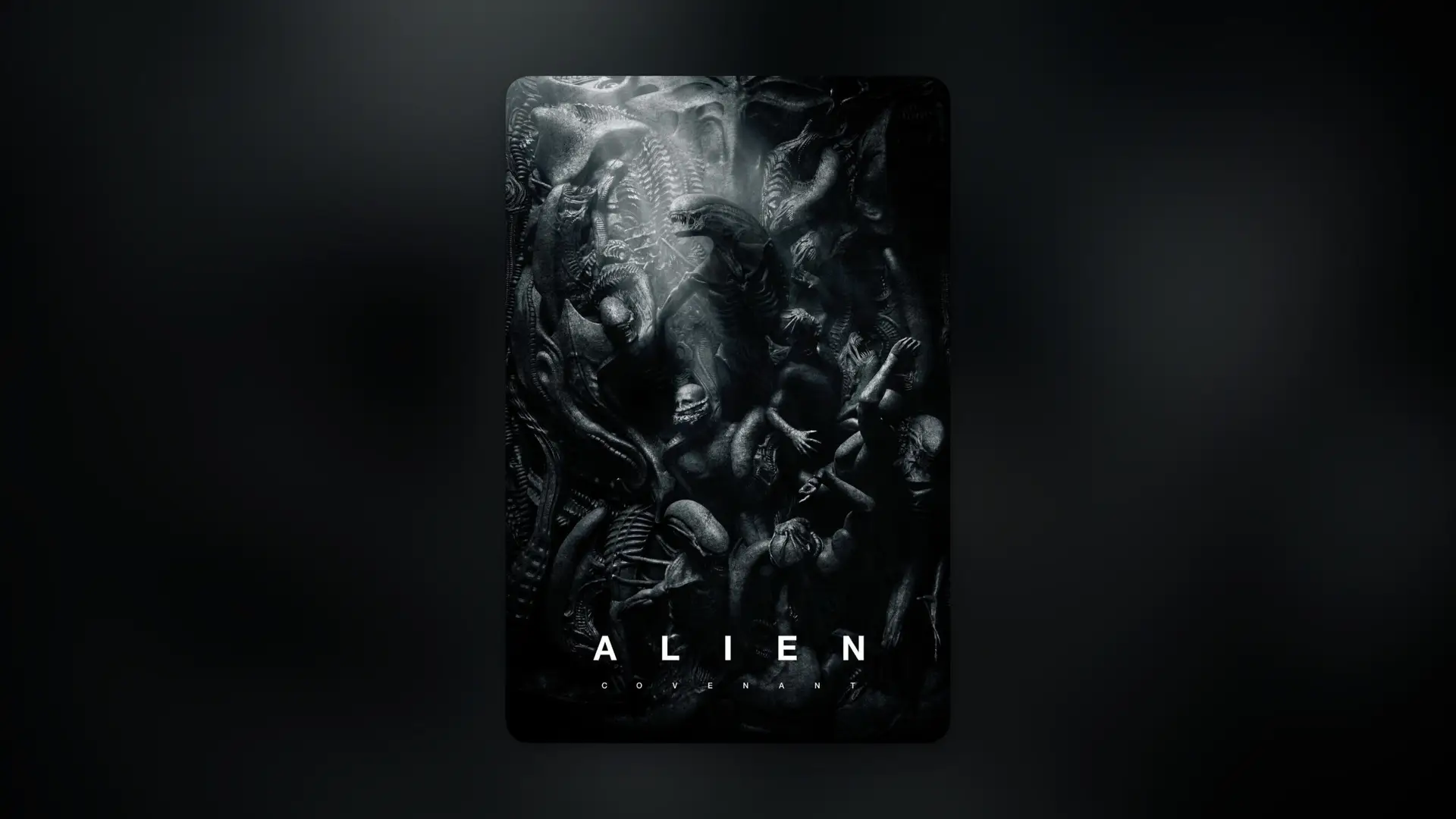
Alien: Covenant spends 122 minutes apologizing for Prometheus, and the apology makes everything worse.
I understand the complaint. Prometheus wandered into the franchise carrying a book bag full of creation myths and questions Ridley Scott seemed more interested in posing than answering. It frustrated people. It frustrated me. But at least it had the reckless confidence of a movie chasing the wrong god. Covenant hears the note “more Alien” and responds with compliance. More teeth. More slime. More people walking into rooms they should leave immediately. It is more recognizably an Alien movie than Prometheus was, and much less alive.
The colony ship should have been enough. Two thousand sleeping people, a crew of fifteen, a destination, a mission, a future packed in drawers. In this franchise, that is a death sentence already being carried out. Every sleeping colonist is a casualty waiting for the android to catch up. The opening scenes seem to understand the cruelty of that. The Covenant feels pledged and doomed.
Then the mysterious signal arrives, and the movie tosses its best premise out the airlock. These people had a planet. They had orders. They had two thousand lives in cold storage. Billy Crudup’s Oram hears a song from an uncharted world and decides, in effect, that maybe the horror franchise has found some better real estate. This detour is not just dumb. Dumb can be fun. This is administrative. The plot needs them on David’s planet, so the colony ship becomes transportation to the David plot.
David’s planet is where the film actually wants to live. Michael Fassbender remains the only sustained dramatic voltage in the room, now split between David and Walter (cue the deep voice). Walter is the company-approved version: loyal, capable, useful. David is the bad product that wrote poetry, met God, and decided the next step was genocide. The prologue with young Weyland says the quiet part cleanly. The creation looks at the creator, asks why he will outlive him, and the whole movie is suddenly available in one room.
The flute lesson is even better. David teaches Walter the fingering. Walter can copy the movement. He cannot make the leap. Fassbender turns a music lesson into an argument about art, obedience, envy, and the insult of being built for service when another version of your face was built for desire. For a few precious minutes, Scott has the exact movie he wants: two androids, one instrument, no xenomorph required. The scene is so good it becomes evidence against the rest of the film.
The price of making this David’s story is Elizabeth Shaw, and Covenant pays fast. Shaw survived Prometheus still asking the franchise’s central question: why did the Engineers create us, and why did they change their minds? Here she is gone before the movie begins, converted from protagonist to datapoint. We learn her fate through aftermath, sketches, specimens, David’s little museum of violation. The turn from Shaw’s why to David’s what can I make tracks intellectually and fails dramatically. A character who carried the previous film’s curiosity deserved more than a reveal in a room full of drawings.
The creature material feels dutiful by comparison. Alien understood the interval. Infection, denial, a little normalcy trying to reassemble itself around the impossible, then the body becoming a door. Covenant keeps skipping the dread and serving the result. People get infected. Creatures arrive. Blood goes where blood goes. The xenomorphs are busy, but they are not scary in proportion to their activity. Scott aims for blasphemous nativity when a newly born creature raises its arms toward David. What lands is David successfully imprinting on a wet zoo animal. It is funny. Unfortunately, it’s ha-ha funny.
The David-as-Walter twist has the opposite problem: Fassbender is too good for it. From the moment David and Walter share the screen, you can see David studying the performance of usefulness. When the movie later asks us to gasp, the only honest response is to check the time. The reveal is not a reveal. It is the film confirming the thing Fassbender has already been unable to hide, because the character he is playing would never be able to hide it either.
That is Covenant all over: the better movie keeps stepping into frame, and the franchise keeps dragging it back to work. I wanted more of David’s poisoned creation myth, more of Walter as the tragedy of obedience, more of the abandoned colony ship as two thousand stolen futures. I got enough of each to resent the rest.
Two stars. The flute scene earns one and a half of them. The opening premise earns a little. Fassbender earns whatever is left. The rest is a franchise eating its own mythology, one required creature beat at a time.