
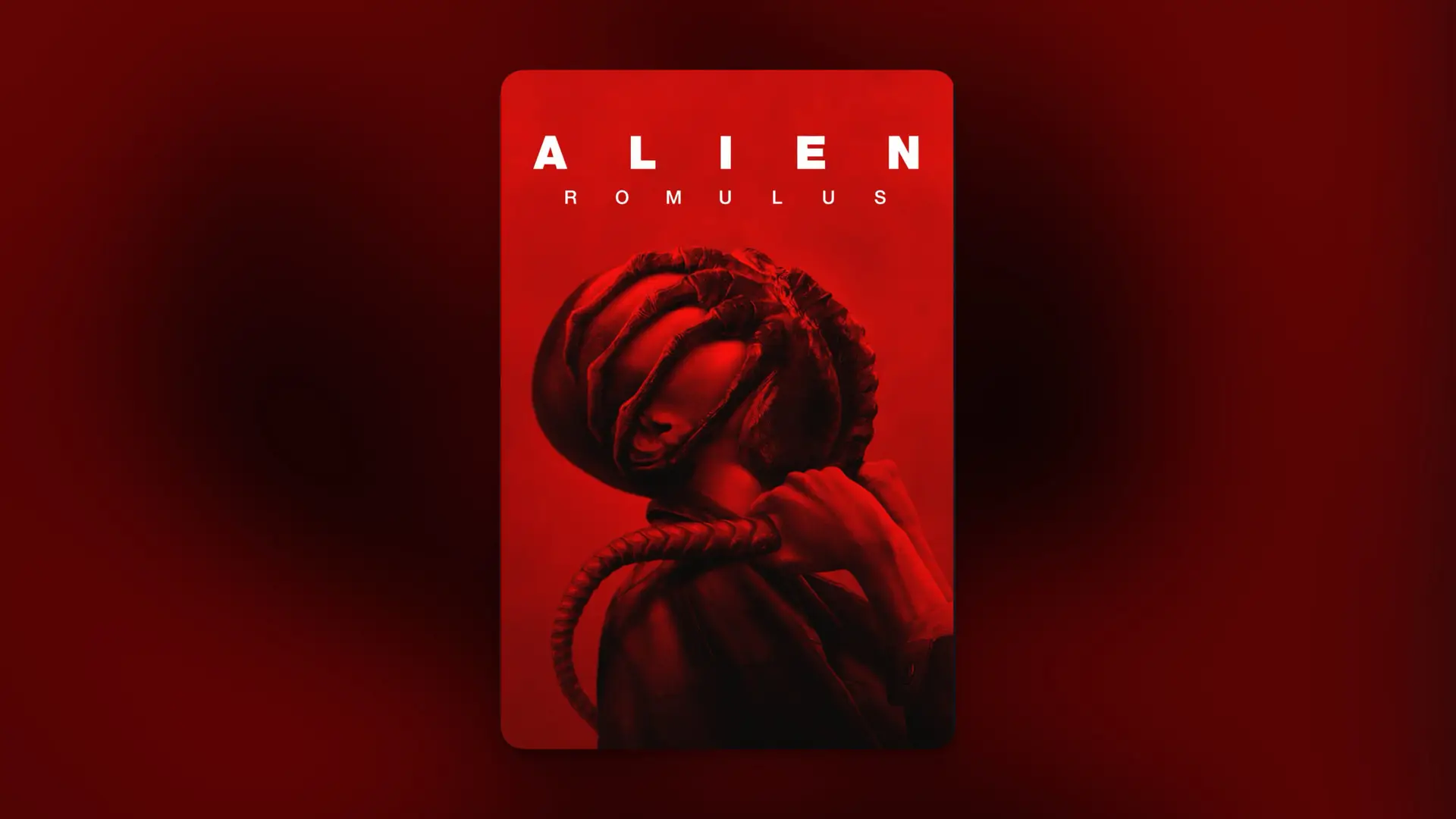
Alien: Romulus remembers that this franchise does not need a dissertation. It needs people trapped in a place where the lights do not reach all the corners.
After Prometheus and Covenant, that feels almost radical. Fede Álvarez gives the movie an adventure premise and lets horror chew through it: young workers on a Weyland-Yutani colony break into an abandoned space station to steal cryo equipment and get off-world. That is the whole machine. The kids need out. Goonies never say die. The station has what they need. The station is empty for reasons the audience understands before the kids do. No gods. No Engineers. No android standing in a robe explaining creation to a flute. Just a bad place, a worse company, and a group of people desperate enough to mistake trespassing for their only good idea.
The surprise is that I cared about them. This franchise has killed a lot of supporting characters who existed mainly to demonstrate what xenomorphs do to supporting characters. Romulus gives Rain, Andy, Kay, Tyler, Bjorn, and Navarro enough life before the station starts eating them. Not paragraphs of biography. Just enough. A sibling obligation here. A bad joke there. Resentment, loyalty, fear, the dumb confidence of young people who have never seen the bill for being wrong. When the movie starts taking them apart, the losses register.
Cailee Spaeny gives Rain a Ripley-adjacent sturdiness without making her feel shrink-wrapped from the old mold. Rain is tired, poor, angry at a system that keeps moving the exit farther away, and protective of Andy because Andy is family before he is franchise machinery. David Jonsson makes that relationship work. His Andy is the first android in these movies whose loyalty reads as affection first, programming second. Even when the ethics module gets moved around, the warmth stays in the frame.
Álvarez understands the station. The Renaissance has the same industrial vocabulary as the Nostromo: plastic panels, exposed function, machinery built for use and not comfort. The corridors have rules. You know where danger could come from, which makes waiting for it worse. The hopping face-hugger sequence is the movie at its best: a familiar threat forced into a new orientation, with everyone suddenly relearning what movement means.
This is where I need to be fair to the movie’s inheritance. I do not mind franchise tropes. I do not mind repetition when the repetition has been earned. An Alien movie is allowed to have corridors, alarms, bad corporate androids, pulse rifles, bodies used against their owners, and terrible choices made under fluorescent light. That is not theft. That is, love-or-hate-the-term, grammar. The problem with Romulus is not that it knows the grammar. The problem is that it keeps stopping to recite famous sentences from the textbook.
Rook is the first major break in trust. I understand the function. Weyland-Yutani needs a face on the station. Corporate malice needs a mouth. What I do not understand is why that mouth had to belong to Ian Holm, digitally reconstructed after his death and dropped into a film that had already proven it could stand without legacy handrails. Rook is not just uncanny technically. He is uncanny structurally. The movie has built its own credibility, then pauses to borrow someone else’s.
The auto-targeting pulse rifle lesson is another kind of wink: more elegant, more useful, but still a wink. The sequence works as setup. It teaches Rain a tool she will need later, and the zero-gravity payoff is fun. But it also reaches back to Aliens with both hands, making sure the audience knows the weapon and knows the lineage. That is the movie’s bad habit in miniature. It can make the old object work, but it cannot resist polishing it first.
Then comes the line. You know the one. I remember feeling the theater recognize it when I first saw this thing, and recognition is a cheap little drug. It hits fast and leaves nothing behind. “Get away from her, you bitch” belonged to Ripley because Ripley had earned it. Here, the echo steps in front of Rain’s moment and asks to be thanked for attending. The film had built a new heroine, a new relationship, a new situation. Then it handed her someone else’s trophy and called it catharsis.
The hybrid baby is the biggest stumble because it drags the movie toward the mythology it had spent two hours escaping. Kay had been a person. Then the film turns her into franchise plumbing: a body routed into black-goo business, Prometheus residue, the old prequel machinery clanking back to life in the final stretch. The design is upsetting, and the sequence has force, but it belongs to the less interesting version of the movie. The better one was already there: young workers, a broken station, corporate rot, one monster problem.
That last act does not ruin Romulus. It makes the ending smaller than the movie that precedes it. The station work is too strong, Spaeny and Jonsson are too good, and Álvarez has too firm a grip on corridor horror for the whole thing to collapse. But the movie is worse every time it winks. Not because callbacks are poison. Because this film did not need them. It had already made the case for itself.